
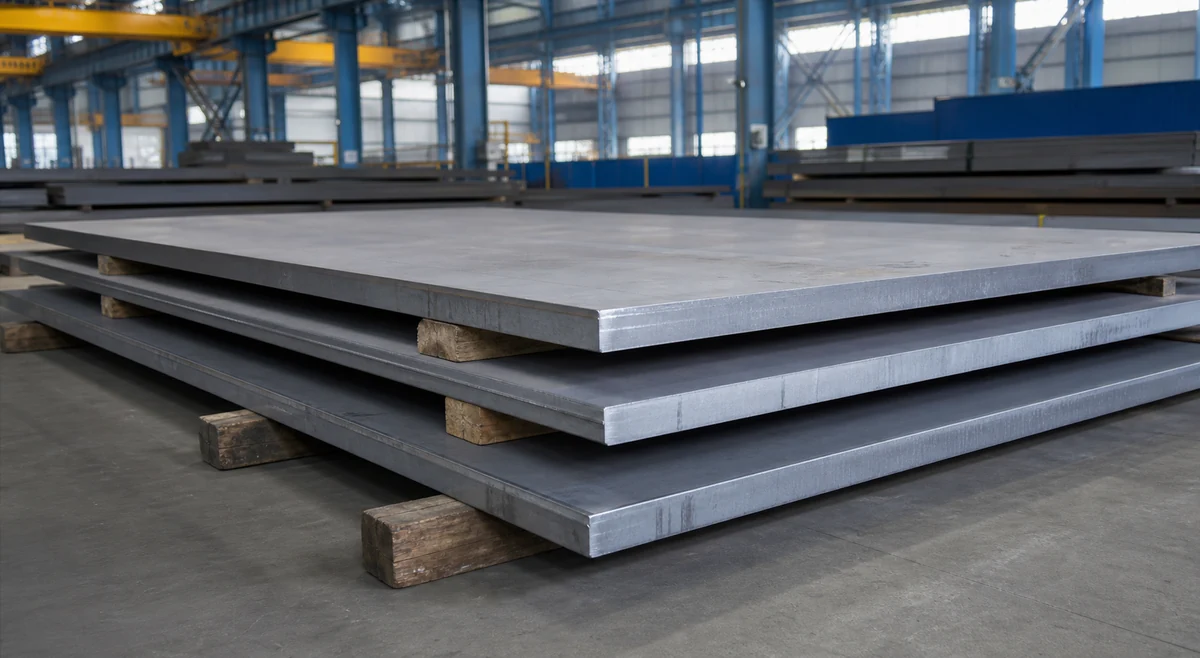
For thin liners, covers and formed panels, review 310S sheet options first. For thicker blanks, supports or parts requiring machining allowance, review plate options first. Keep the thickness required by the drawing, then compare the available material, finish and fabrication cost. The product name on the order must also match the specified standard.
Quick Facts for Buyers
- ASTM SI plate boundary
- At least 5.00 mm thick and more than 250 mm wide
- ASTM SI sheet boundary
- Below 5.00 mm thick and at least 600 mm wide
- Hechuang flat-product range
- 0.25–150 mm thick; up to 2,500 mm wide
- Buyer decision
- Compare finish, yield and processing per finished part
How ASTM distinguishes plate and sheet
ASTM A240/A240M covers stainless steel plate, sheet and strip. ASTM A480/A480M supplies the general requirements used with A240, including product definitions and dimensional requirements.
For an order using the SI metric provisions of ASTM A480/A480M-25b, Sections 3.2.2 and 3.2.3 distinguish the products as follows:
- Plate: thickness of at least 5.00 mm and width greater than 250 mm.
- Sheet: thickness below 5.00 mm and width of at least 600 mm.
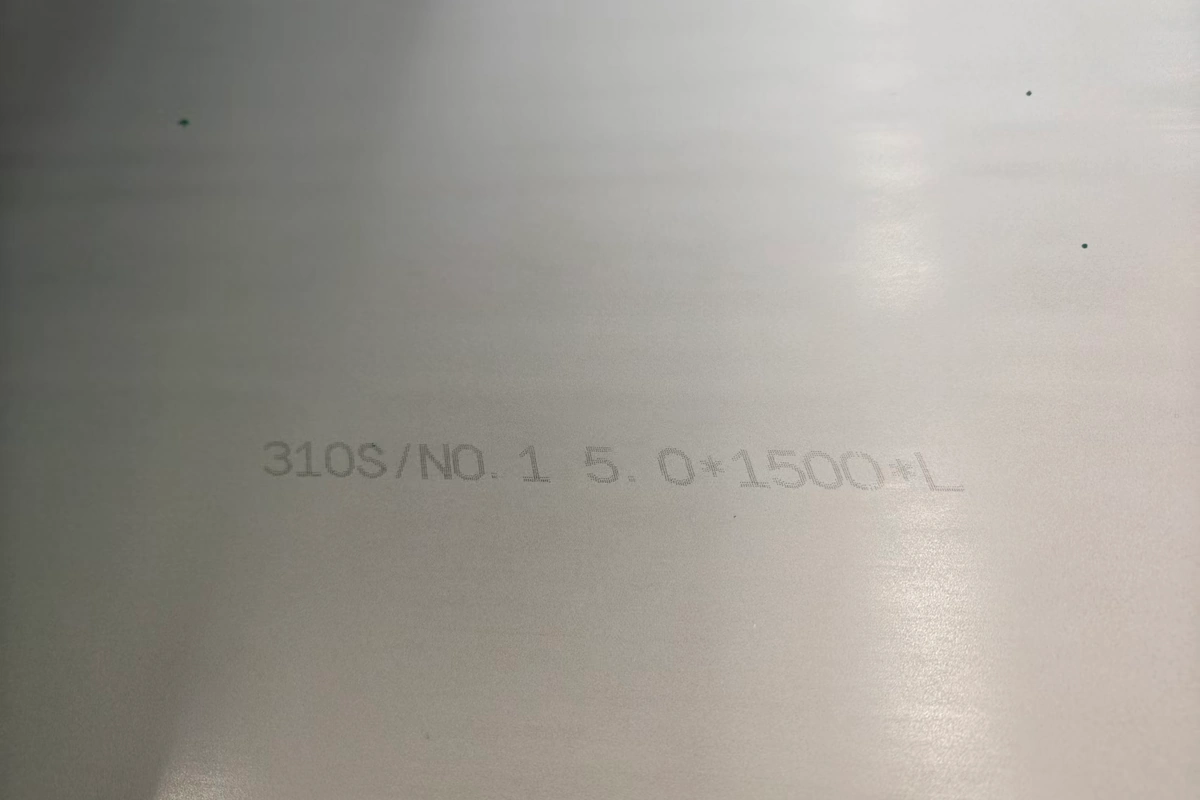
For example, 5 mm × 1,500 mm material is plate under this classification, even if a supplier lists it commercially as cold-rolled sheet. Cold rolling and hot rolling describe manufacturing processes; they do not, by themselves, determine whether the material is plate or sheet.
Specify the standard edition and unit system in the order. The inch-pound and SI requirements are separate systems, and these metric definitions should not be treated as a universal boundary for every standard.
Hechuang 310S flat-product ranges
We supply 310S flat material through the following options. Our 310S plate and 310S sheet pages give further product and ordering details.
| Hechuang supply description | Thickness | Width |
|---|---|---|
| Cold-rolled flat products and cut lengths | 0.25–8 mm | Up to 2,500 mm |
| Hot-rolled coil supplied as cut lengths | 3–16 mm | Up to 2,500 mm before cutting |
| Hot-rolled sheet or plate | 3–16 mm | Up to 2,500 mm |
| Medium and heavy plate | 16–150 mm | Up to 2,500 mm |
These are commercial supply ranges, not standard definitions or a live stock list. Maximum thickness and width cannot necessarily be combined in one item. We confirm the product form, available size, finish and delivery time for your quantity in the quotation.
Choose by the component and the next process
| Decision point | Review sheet options first | Review plate options first |
|---|---|---|
| Section and geometry | Thin liners, covers and formed panels | Thicker supports, blanks and parts with machining allowance |
| Forming | Repeated bends or punched features in thinner material | Bending or rolling a thicker section with suitable equipment and tooling |
| Surface | A specified finish or protected face is important | An as-supplied finish is acceptable, or machining or finishing will establish the final surface |
| Cutting | Shearing, punching or laser cutting may suit the part | Laser, waterjet, plasma or machining may suit the part |
These are starting points, not exclusive uses. Choose the cutting method by thickness, geometry, edge quality and the next fabrication step. For either product, state whether flatness is required on the supplied material, cut blank or finished part.
In the 3–8 mm overlap between our cold-rolled and hot-rolled supply ranges, the available stock format, finish and processing work can matter more than the commercial product label. Compare the cost per usable part as well as the material price.
Surface and forming requirements
Two useful finish descriptions are No. 1 and 2B. No. 1 is commonly used for hot-rolled material that has been annealed and descaled or pickled, with a generally dull appearance. A 2B sheet finish has a smoother, moderately reflective appearance; it is not a mirror finish. Neither finish name specifies a numerical surface roughness limit on its own.
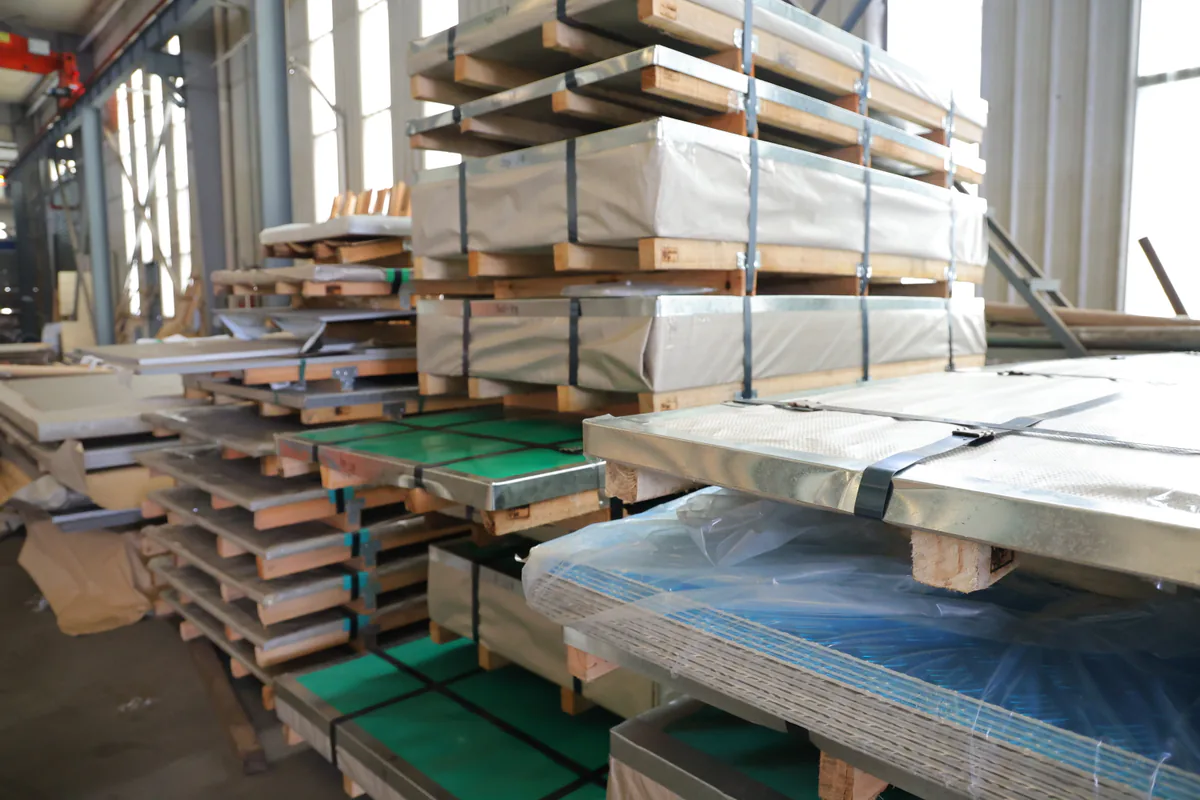
For a visible cover or panel, identify the appearance-critical face and any unacceptable marks. If the finish must match another component, provide a reference sample or agreed acceptance criteria. Where protective film is needed, tell us whether it must remain on during cutting or bending. Finish availability depends on the required size and supply option.
For formed parts, include bend radii, forming direction where relevant and finished dimensions. Plate can also be bent or rolled, but a thicker section changes the equipment, tooling and allowances needed. Send the drawing early for a rolled shell, heavy panel or thick transition.
Illustrative buying example for a 5 mm formed cover
Suppose a drawing specifies a 5 mm 310S cover with bent edges and a visible outer face. This is a purchasing example, not a customer order. The design thickness stays at 5 mm; the buying decision is how to obtain the required part from suitable material.
First, ask which cold-rolled or hot-rolled formats are available in the required size. For a 1,500 mm-wide starting product ordered under the ASTM metric definition above, the product form is plate. The quote should describe its rolling condition and finish separately.
If the specified outer face can be achieved directly with one available finish, that option may avoid extra finishing. If the cover will be finished after fabrication anyway, compare the total finishing work before paying more for the starting surface. The proposed material still needs to suit the bend geometry and appearance requirements.
Next, compare how many blanks fit into each available stock size, allowing for the agreed cutting method and layout. A lower price per kilogram can be offset by more unused material or extra cutting and finishing. Compare total cost per finished part, including material yield and processing, alongside delivery time.
Finally, agree where flatness will be measured. If the drawing requires a flat seating face after bending, inspecting the uncut starting material alone will not answer that requirement. The quotation should state whether we are supplying material, cut blanks or formed parts, and include the dimensions, finish, processing and acceptance criteria for that scope.
Cutting and edge preparation
Both 310S sheet and plate can be supplied as full sizes or processed pieces. The cutting method depends on thickness, geometry, edge quality, heat-input limits, downstream welding or machining, and the required tolerance. Our processing services include drawing-based cutting and edge preparation.
State whether a dimension is for a rough blank or a finished part. Add hole details, bevel geometry, edge finish and inspection points. A rough blank may need an agreed allowance for later machining; a finished part needs its final dimensions and tolerances stated on the drawing.
If parts must retain heat traceability after cutting, specify how identification will be transferred to individual pieces or controlled bundles. A visible grade marking is useful for identification, but it does not replace the material documents required by the order.
Flatness and tolerance
State whether the flatness requirement applies to the supplied material, the cut blank or the finished part. Cutting, forming and welding can change the final shape even when the incoming product meets its ordered tolerance.
Name the applicable dimensional standard or drawing tolerance and state when flatness will be checked. For a processed part, identify the measurement surface, datum and any local requirement around holes, edges or weld preparation. Agreeing this before processing avoids comparing a raw-material tolerance with a finished-part requirement.
Check the 310S service conditions separately
Choosing plate or sheet does not establish whether 310S is suitable for the service. For furnace and other elevated-temperature components, assess the actual material temperature, atmosphere, load, support arrangement, thermal cycling and expected deformation as part of the component design. Product form affects fabrication and section geometry, but it does not establish a temperature limit or a service-life value.
What to send for a first quotation
You do not need to settle the sheet-or-plate name before contacting us. Start with your drawing or required dimensions, quantity and next fabrication step. Include the following details where already specified:
- product standard and edition;
- finish, protected face, bend details and tolerances;
- whether you need full material, cut blanks or finished parts;
- inspection and material-document requirements;
- destination and target dispatch date.
We will review the available 310S supply options, compare the relevant processing work and identify any details still needed for the quotation.
Frequently asked questions
Is 5 mm 310S material sheet or plate?
Under the SI definitions in ASTM A480/A480M-25b, 5 mm material wider than 250 mm is plate. For example, 5 mm × 1,500 mm material meets that definition. The order should also identify the rolling condition and finish, rather than relying on a supplier's commercial name.
Is sheet always cold rolled and plate always hot rolled?
No. Sheet may be hot rolled or cold rolled, and plate can also be cold rolled. Product classification, rolling condition and finish are separate details. Specify each one where required by the order.
How should I compare options in the 3–8 mm range?
Keep the design thickness fixed and compare the available formats against the required finish, forming and dimensional requirements. Check the number of usable blanks from each stock size, processing cost and delivery time. The least expensive material per kilogram is not necessarily the least expensive finished part.
Can both sheet and plate be cut to size?
Yes. We supply cut lengths, blanks and profiles. Send the drawing or dimensions, thickness, quantity and next process so we can propose a suitable cutting method and confirm the edge and inspection requirements.
Does the supply table mean every size is in stock?
No. It describes our normal supply capability. Current availability depends on the size, finish, quantity and processing required. Contact us to check material for your order.
Can plate or sheet determine whether 310S suits a furnace component?
No. The component designer must also assess the material temperature, atmosphere, load, supports and thermal cycling. Choosing a product form does not establish a temperature limit or expected service life.
Technical Sources
Technical references apply to the material designation, product form and condition described here. They do not certify an individual delivery; the order and material certificate identify the supplied material.
Check a 310S sheet or plate option
Send the drawing or dimensions, quantity and next fabrication step. We will review the available 310S sizes, finishes and processing route, then confirm the details needed for a quotation.