
Start with 309S when the existing design and duty already support it; evaluate 310S when its higher chromium-nickel composition is relevant to the actual exposure or the drawing specifies it. Neither grade is a universal upgrade. Compare oxygen potential, sulfur or carburizing species, deposits, metal-temperature cycle, load and geometry, then request separate grade-specific offers. 309S is UNS S30908 / EN 1.4833; 310S is UNS S31008 / EN 1.4845.
Quick Facts for Buyers
- Verified grade identities
- 309S: UNS S30908 / EN 1.4833 · 310S: UNS S31008 / EN 1.4845
- Typical chromium
- 309S: 22.3% · 310S: 25.5%
- Typical nickel
- 309S: 12.3% · 310S: 19.1%
- When 310S enters the shortlist
- When its higher chromium-nickel composition is relevant to the duty
- Current ISO edition
- ISO 15510:2014 · confirmed in 2025
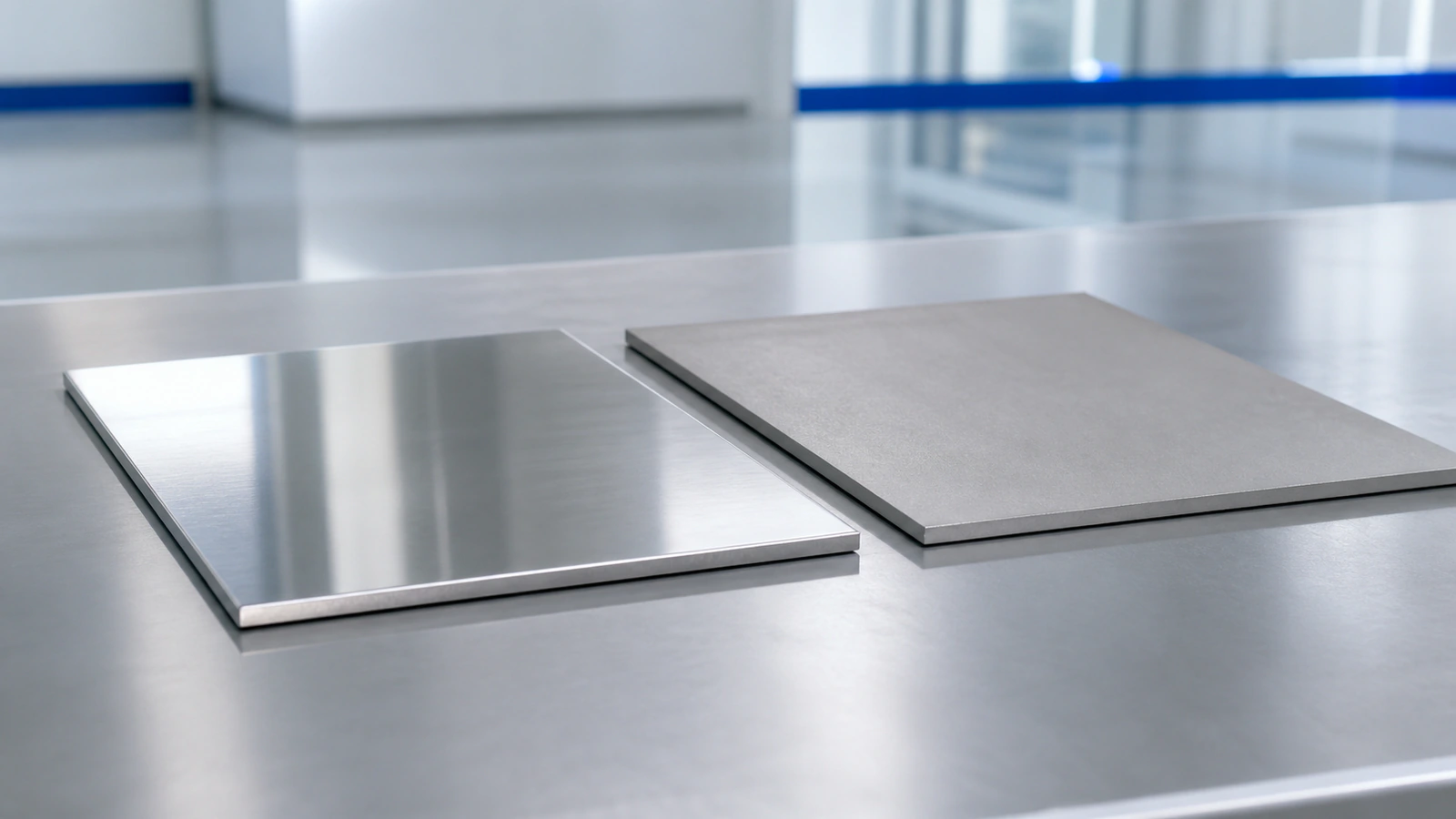
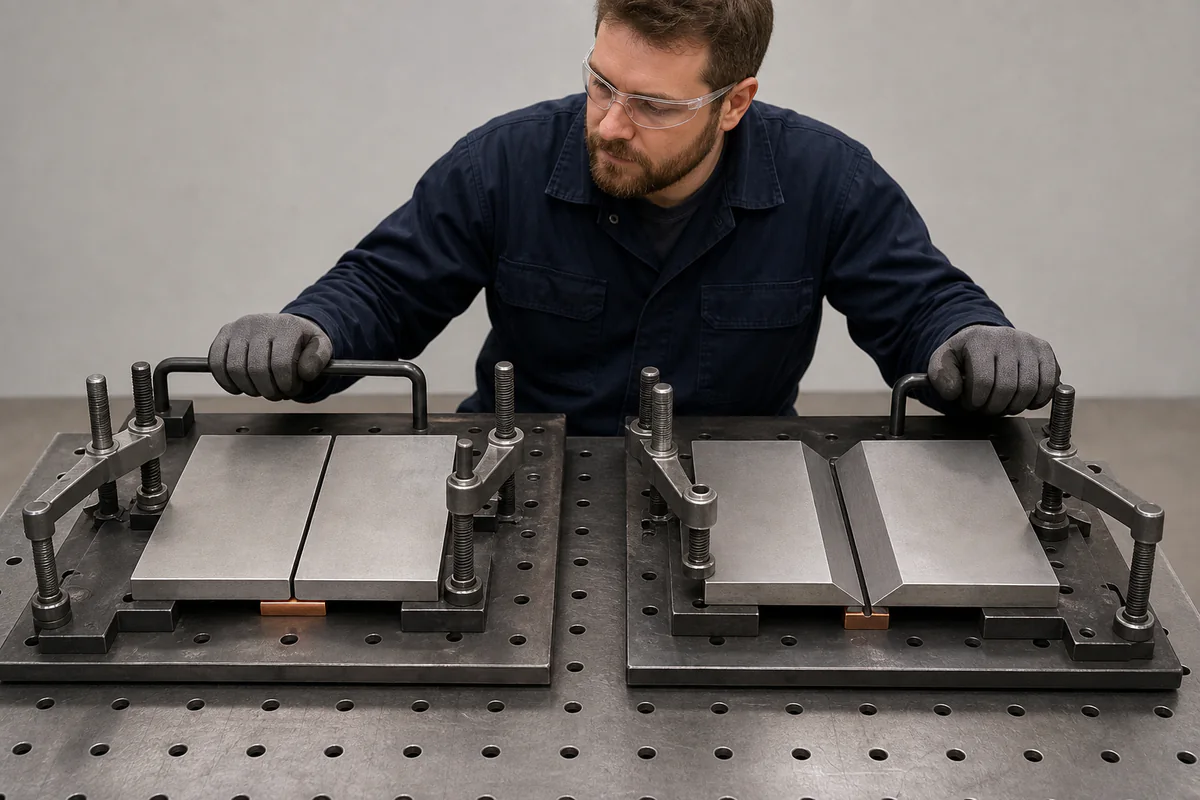
Selection Summary
For oxidizing-air service, evaluate 310S when the component needs its higher chromium and nickel composition or the specified drawing already names it. Keep 309S when the existing design and operating record do not justify a change. Sulfidation, carburization, thermal-cycling damage and creep still need separate attention; a higher alloy content is not a universal fix.
Choose between 309S and 310S by matching an approved material specification to the component, not by ranking two grade names. 309S is Type 309S / UNS S30908 with EN 1.4833, while 310S is Type 310S / UNS S31008 with EN 1.4845. ISO 15510:2014 is the current edition confirmed in 2025; its public metadata confirms edition status and scope rather than individual designation relationships.
Product / condition: The comparison is centred on flat-product forms. Displayed composition figures are typical values, not a merged specification table or heat-specific MTC result.
Applicability: Use the table to compare the two RFQ alternatives. The exact grade, product standard and edition, form, condition, purchase order and inspection document control acceptance.
309S and 310S selection and procurement summary
Decision point 309S 310S Buyer action Grade identity Type 309S / UNS S30908; EN 1.4833 is the corresponding EN designation. Type 310S / UNS S31008; EN 1.4845 is the corresponding EN designation. Name one exact grade and governing product standard in each quotation line. Typical composition context C 0.06, Cr 22.3, Ni 12.3 C 0.05, Cr 25.5, Ni 19.1 Treat these as comparison context, not universal ordered limits. Listed flat-product forms Hot-rolled coil, cold-rolled coil and quarto plate Hot-rolled coil, cold-rolled coil and quarto plate Confirm size, condition, production source, quantity and inspection scope for the enquiry. Selection basis Approved S30908 specification plus service, design and fabrication review Approved S31008 specification plus service, design and fabrication review Do not substitute or promise performance from the grade name alone.
The typical values show a clear alloy-design difference: the 310S has higher chromium and nickel figures than the 309S. That difference is relevant to technical screening, but it is not a complete component decision and it is not a commercial claim that one grade always lasts longer. Atmosphere, thermal cycle, section, load, design code, fabrication and inspection can change the result.
A faster service screen
Begin with four facts: the component function, actual metal-temperature range, atmosphere and load. Then add cycle frequency, deposits and section thickness. If the current drawing and operating record already support 309S, that is the logical baseline. Move 310S into the comparison when its higher chromium-nickel composition is relevant to the stated exposure, when the design names it, or when the available product form changes the fabrication plan. Do not let a catalogue temperature or alloy percentage decide the component by itself.
Teaching example: A light shield in mostly oxidizing air at a stable temperature may stay with the established 309S selection. A support beside a burner, with frequent starts, local flame impingement, ash deposits and sustained load, needs a separate check of hot strength, expansion, oxidation and attachment details. These two parts can share a furnace and still need different material decisions. Record which condition drives the choice so quotations for 309S and 310S can be compared on the same component basis.
Chemical Composition and Order Standards
Separate typical values from ordered limits
Typical chemistry values are C 0.06, Cr 22.3 and Ni 12.3 for 309S/4833, and C 0.05, Cr 25.5 and Ni 19.1 for 310S/4845. They explain the main alloy difference, but they are not complete maximum/minimum limits for every ASTM, EN, JIS or other product specification.
For acceptance, use the chemical limits in the standard and edition named on the order. Then compare the heat analysis on the MTC with those limits. If the buyer needs tighter project limits, they must be technically reviewed, feasible for the selected production source and written into the purchase order. A typical value does not guarantee that every conforming heat will have that exact chemistry.
Both the 309S and 310S names contain S, but their complete chemistry is not therefore similar. The published chromium
and nickel profiles differ substantially. Use those figures for comparison, while taking allowable
stress, oxidation rate and component life from the project’s engineering basis.
Use designation comparisons as a translation aid
Type 309S / UNS S30908 aligns with EN 1.4833, and Type 310S / UNS S31008 aligns with EN 1.4845. ISO 15510:2014 is the current edition confirmed in 2025. These identifiers help interpret a drawing or certificate, but the ordered product standard still sets chemistry, condition, tolerances and testing.
Write the purchase description from the project’s governing system. If the design calls for ASTM Type 309S, state the applicable ASTM product standard and edition rather than replacing it with “1.4833 equivalent.” If the design calls for EN 1.4845, state the EN material name and product standard required by the project. Other identifiers may appear in a note to help quotation comparison, but the required material must remain unambiguous.
Incoming inspection should verify consistency among purchase order, material marking and MTC. An MTC with the wrong designation is not cured by a sales note saying the grades are similar. Stop the release, trace the offered specification and obtain documented disposition before cutting or fabrication.
Temperature, Atmosphere and Cycling
Start with metal temperature over time: normal, peak, upset, dwell and cycling. Nearby furnace parts can see different thermal histories, so use the component temperature rather than one equipment setpoint.
The grades are used for furnace equipment, annealing boxes, thermowells, baffle plates and salt pots; 310S is also used in industrial furnace equipment, heat-treatment baskets, heat exchangers and boilers. These are application examples, not confirmation that a proposed component is approved or guaranteed.
Gas chemistry can dominate a comparison. Identify oxidizing or reducing conditions, oxygen potential, carbon activity, sulphur compounds, nitrogen, water vapour and combustion products. Include ash, salts, flux, process carryover and deposits. An air-service statement about oxidation resistance in air cannot be applied unchanged to a low-oxygen, carburizing, sulphur-bearing or deposit-covered surface.
Cycling matters because oxide growth, expansion and contraction can lead to spallation, distortion or fatigue. Give cycle frequency, amplitude and rapid-cooling events rather than only “intermittent service.”
Add mechanical and geometric inputs: sustained load, pressure, support spacing, wall or plate thickness, weld location, restraint, allowable deflection and corrosion allowance. At elevated temperature, creep strength or thermal movement can control the design. Grade identity and typical chemistry do not supply code allowable stresses or predict component lifetime.
Published 310S temperature guidance is a starting point. The final decision still needs the actual atmosphere, load, section, duration, cycling and design rules. Where critical data are missing, raise the question before material is ordered.
Fabrication and Welding
Both 309S and 310S are austenitic grades, so a fabrication plan should anticipate thermal expansion, relatively low thermal conductivity and distortion during welding. That shared metallurgical family does not mean one WPS automatically covers both grades. The fabricator must check the qualified base-metal range, product form, thickness, process, joint, consumable and heat controls against the exact ordered material.
For 310S, general welding guidance supports use of 310S electrodes for fusion welding. No equivalent one-line filler rule applies to 309S. The project should therefore name or approve the applicable consumable and WPS rather than use a shared “heat-resistant stainless” instruction.
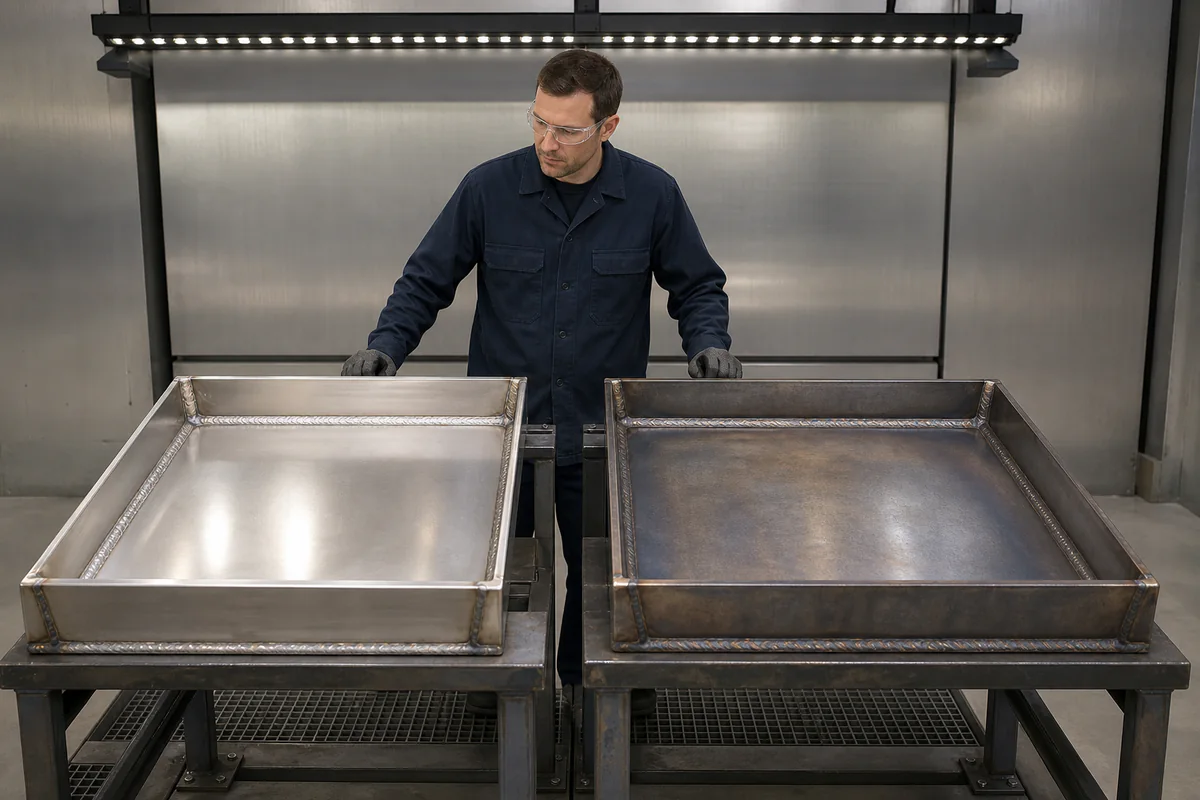
For a welded or formed component, compare WPS coverage, filler, heat input, joint and distortion controls for the exact grade and thickness. Preserve grade and heat identity through cutting; PMI, when ordered, supports rather than replaces the MTC.
Keep carbon-steel contamination away from the stainless surface by controlling tools, tables and handling. Specify removal of shop contamination and the required final surface condition. If heat tint removal or post-fabrication treatment is required, connect it to the approved procedure and final inspection rather than assuming it is included in the grade name.
A proposed change from 309S to 310S—or in the other direction—should reopen the fabrication review. Confirm bend behaviour for the supplied condition, WPS coverage, consumable, distortion, inspection and service. Record the approval before manufacture so the shop traveller, marking and final documents all follow the same order definition.
Supply Form and Inspection
Both grade families are published in hot-rolled coil, cold-rolled coil and quarto plate. For a usable offer, state thickness, width, length or coil weight, quantity, finish and whether the supplier delivers mill material, a cut blank or a finished part.
If the component uses pipe, tube, bar, forging or a fitting, select the relevant product standard for that form. Do not certify those items against a flat-product page merely because the grade name appears similar. Confirm grade availability, manufacturing method, heat treatment, dimensions and required testing within the applicable specification.
Build inspection into the quotation. State the required inspection-document type, heat analysis, mechanical values, dimensional report, surface inspection, PMI, NDT, intergranular or other supplementary tests only where required by the design and standard. Define third-party witness or hold points early enough for the mill and processor to plan them.
At receipt, match the marking and heat number to the MTC and purchase order. Check designation, standard and edition, form, dimensions, condition and reported results. Separate each heat and decision in the receiving record. If an exception was approved, retain the technical disposition with the order rather than relying on email shorthand.
Choose and Quote the Grade
When to choose
A replacement drawing marked 309S should not become 310S only because a newer material list uses that name. Compare the duty and purchasable forms in this order:
- Reconstruct the duty. Record actual atmosphere, deposits, normal and peak metal temperatures, cycles, load, supports, distortion and observed damage.
- Confirm the design basis. Identify the governing code, allowable stresses, drawing revision, corrosion allowance and approval authority.
- Compare the material specifications. Review S30908 and S31008 chemistry limits and properties in the applicable product standards, not just producer typical values.
- Check product feasibility. Confirm form, size, condition, production source, quantity, dimensional controls and the required document package.
- Validate fabrication. Check forming, WPS/PQR coverage, filler, heat controls, cleaning, distortion control and NDT for each candidate.
- Issue controlled alternatives. Quote 309S and 310S separately with their exact standards, assumptions, exceptions and delivery bases.
- Approve and trace. Engineering selects or approves the material in writing; purchasing carries it into the order; incoming inspection verifies markings and MTCs before release.
This workflow makes uncertainty visible and keeps the material decision with the named project authority. If service inputs cannot be verified, engineering can define additional inspection, sampling or testing before approving the grade.
RFQ Checklist
What to include in the RFQ
A short comparison enquiry needs:
- Grade designations, product standard and edition, product form, dimensions and quantity for each quoted option.
- Metal temperature, atmosphere, cycling, load and drawing requirements that control the comparison.
- Delivery condition, inspection documents, witness points and staged inspection timing needed for comparable offers.
- alternative approval criteria and the person or function authorized to approve a change.
Ask for separate 309S and 310S quotation lines, each with its grade, standard, condition, document package and exceptions. See the 310S grade page and 310S plate page, then send dimensions and optional drawings through the full RFQ form; drawings and specifications can be attached optionally.
Conclusion
309S and 310S are distinct austenitic heat-resistant stainless grades. Current producer information identifies UNS S30908 and S31008, shows different typical chromium and nickel profiles, and lists hot-rolled coil, cold-rolled coil and quarto plate for both product families. Those facts support comparison; they do not establish universal equivalence or performance.
The right choice joins grade identity to atmosphere, temperature cycle, load, section, fabrication, supply form and inspection. Name the governing standard and edition, keep cross-standard designations in context, obtain written approval for substitutions and verify the delivered heat against the purchase order. That process produces a usable engineering and purchasing decision.
Frequently asked questions
Are 309S and 310S interchangeable?
No. They are separate grades with different identifiers and producer composition profiles. Any substitution must be checked against the product standard, service, fabrication, dimensions and inspection requirements.
What are the common UNS identifiers for 309S and 310S?
309S is UNS S30908 and 310S is UNS S31008. Pair the identifier with the applicable product standard and edition in the purchase description.
Which EN designations should I check when comparing 309S and 310S?
EN 1.4833 is associated with 309S / UNS S30908 and EN 1.4845 with 310S / UNS S31008. Specify the designation and product standard you require, then check the offered chemistry, condition and testing; the names do not establish automatic cross-standard equivalence.
Is 310S always the better high-temperature grade?
No. The decision depends on atmosphere, temperature profile, cycling, load, geometry, fabrication plan, design code and the approved product standard. A producer temperature statement is not a component guarantee.
Can the same welding procedure be used for both grades?
Do not assume it. Review base-metal identity, thickness, joint, filler, heat input, cleaning, service and the qualified WPS for the actual grade and component.
What information helps compare a 309S and 310S quotation?
Send the exact designation and standard, form, dimensions, quantity, service atmosphere and cycle, fabrication, inspection and MTC scope, destination and delivery date.
Technical Sources
Technical references apply to the material designation, product form and condition described here. They do not certify an individual delivery; the order and material certificate identify the supplied material.
Build Your Enquiry
Open the relevant grade and product pages, then send the exact designation, standard, form, dimensions, quantity, processing and inspection scope to the sales team.