
Choose 253MA when its oxidation behavior, elevated-temperature strength, fabrication plan and available product form match the component’s actual duty. Published seamless tube and pipe data supports strong cyclic-oxidation performance and some carburizing conditions, but warns against cracked ammonia, low- or no-oxygen nitrogen-bearing atmospheres, strong wet corrosion and assuming the same behavior in alternating oxidizing/carburizing service. Specify 253MA / UNS S30815 / EN 1.4835 with the governing product standard, then provide the metal-temperature history, atmosphere, load, cycling, deposits, geometry, fabrication, joining and inspection requirements.
Quick Facts for Buyers
- Grade identity
- 253MA / UNS S30815 · EN 1.4835
- Alloy strategy
- Chromium-nickel steel with silicon, nitrogen and rare-earth additions
- Strongest early use case
- Oxidizing service where cycling and scale adhesion matter
- Published welding reference
- Heat input <1.5 kJ/mm · interpass <150°C
- Supply decision
- Confirm the exact form, size, condition, standard and document package
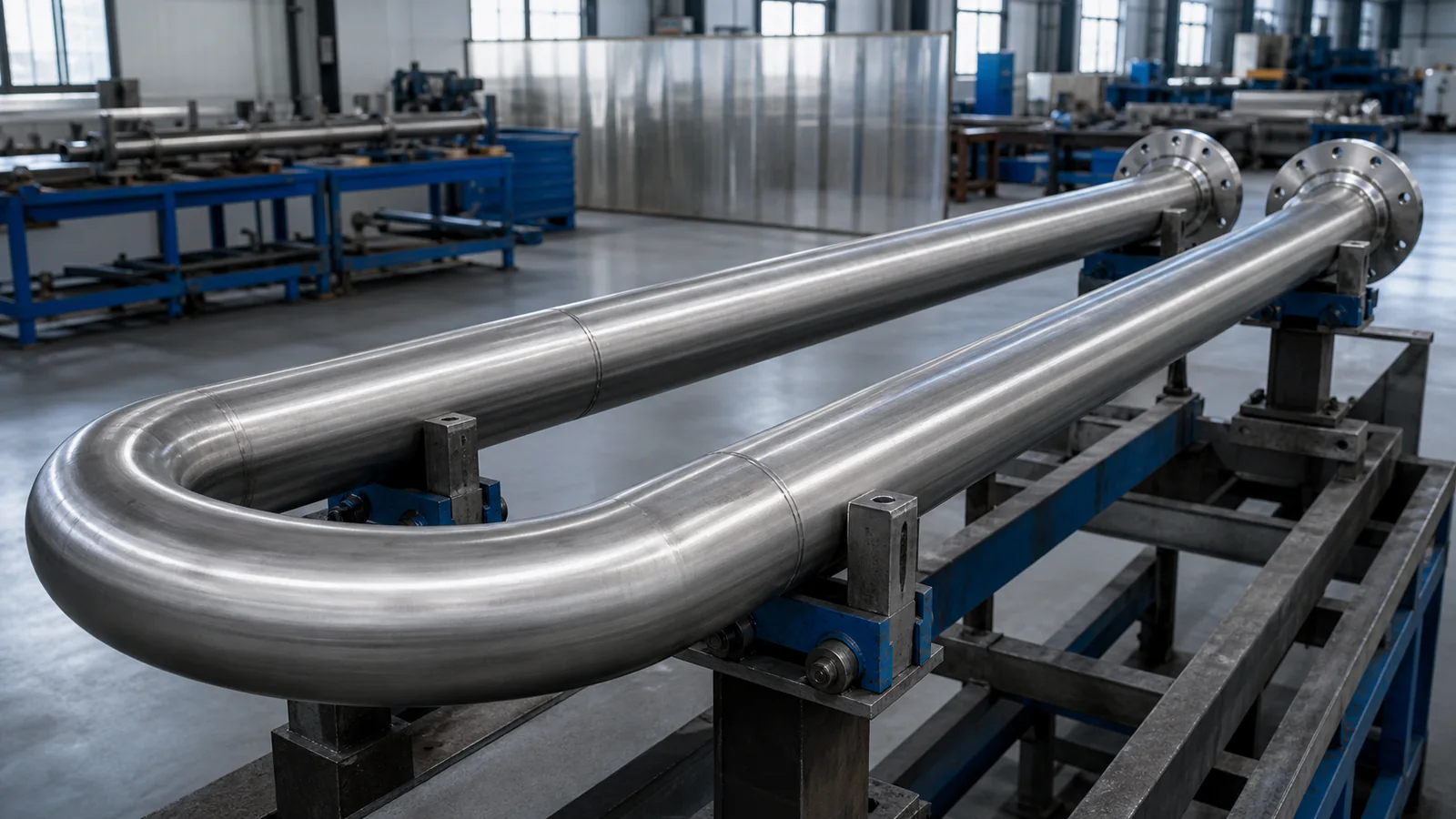
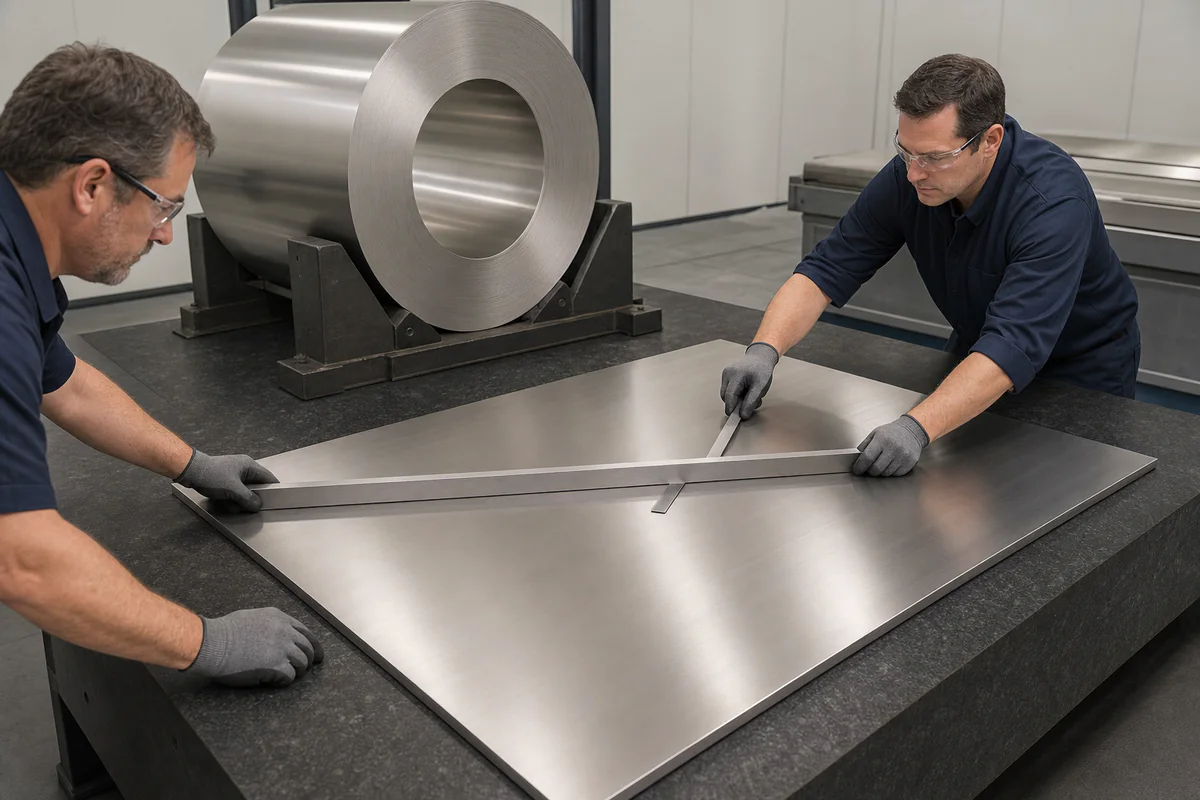
Select 253MA through a controlled engineering and purchasing workflow. Its alloy concept is suited to high-temperature duties, especially where cycling matters, but it is only a starting point. The component still needs a design basis, while the order needs a deliverable product specification. A sound record connects the material decision to the approved drawing, purchase description, inspection plan and documented approval.
Grade Identity
253MA is an austenitic heat-resistant stainless steel associated with UNS S30815 and EN 1.4835. Keep the commercial name, designation and product standard in separate fields. “253MA” is not an AISI number, and an identifier by itself does not define plate, sheet, tube, bar or another form.
Use purchase wording such as:
253MA / UNS S30815, product standard [number and edition], product form [ ], dimensions [ ], supply condition [ ], inspection document [ ].
The responsible buyer should confirm that the chosen product standard actually covers the ordered form and that the required chemistry, mechanical properties, heat treatment, tolerances, tests and marking are stated. Do not build a substitution decision from an unsourced crosswalk. If a drawing uses a different designation system, raise a technical query and obtain written approval before quotation or order release.
The material certificate should repeat the identity accepted by the purchase order and connect it to heat or lot traceability. A certificate showing a familiar grade name is not enough if the product standard, form or condition differs from the order.
In enquiries, “high temperature” is often the only service description we receive. We normally ask whether that means furnace or metal temperature, how often the part cycles, what gases or deposits contact it, whether it carries load, and which product form must actually be purchased. Those answers are more useful than asking for the grade with the “highest temperature resistance.”
Alloy Design
The alloy design contains chromium and nickel together with silicon, nitrogen and a rare-earth addition. These features explain why the grade enters a shortlist; they are not a recipe for verifying an individual heat.
Chemistry acceptance must come from the ordered product standard and the agreed inspection document. Nominal values on a data page do not replace product-analysis limits, permitted variation or purchaser testing. If a project requires a restricted chemistry, additional element reporting or positive material identification, state it before order acceptance.
Translate alloy language into decisions
Use the alloy description to frame questions:
- Does the environment allow a protective oxide to form and remain?
- Is cyclic oxide adherence a controlling issue?
- Does the mechanical design use appropriate time-dependent properties?
- Are the required product form and section available to the accepted standard?
- Can the approved fabrication and welding plan preserve the required geometry?
This keeps alloy language connected to evidence and avoids claiming that one element addition guarantees performance in an unspecified component.
Oxidation
Oxidation resistance, including cyclic conditions, must be assessed separately in air, carburizing and other gaseous atmospheres. That distinction can help an engineer decide whether 253MA deserves detailed review.
Do not turn approximate operating-temperature wording into a design temperature, guaranteed metal temperature or promised lifetime. A component may be controlled by load, creep, section loss, thermal gradients, welds, deposits or a process chemistry unlike the evaluated exposure.
For an oxidation review, provide:
- normal and peak metal temperatures, not only furnace setpoint;
- time at temperature and heat-up or cool-down rates;
- gas composition and pressure at the material surface;
- deposits, scale removal and shutdown contamination;
- required section allowance and inspection interval;
- evidence from previous components, if available.
If testing is proposed, define the specimen condition, gas renewal, temperature cycle, deposit, duration and evaluation method. A short coupon exposure may compare materials under that test, but it should not be marketed as a complete component-life prediction.
Creep and Service Inputs
Time-dependent creep and creep-rupture data for stated forms and test conditions show why stress and duration must enter a high-temperature selection. Such data does not authorize the supplier to calculate a component outside the governing design code.
The responsible engineer should identify the applicable code or design method, design temperature definition, loads, pressure, self-weight, restraint, vibration, allowable deformation, weld factors, section allowance and duration. Confirm which material-property source the code accepts and whether it covers the exact product form, condition and temperature range. Do not mix producer mean data, minimum design values and room-temperature test results.
Separate four temperatures
Record four values where relevant:
- process or furnace temperature;
- expected bulk metal temperature;
- local peak metal temperature;
- design temperature defined by the governing rules.
They are not automatically equal. Insulation, deposits, radiation, flow, contact, internal cooling and transient operation can create large differences. The project design team converts the actual process conditions into design inputs.
Service duration also needs definition. Continuous operation, repeated batches, long idle periods and emergency excursions create different combinations of time, atmosphere and stress. State the design-life basis and the acceptance requirements that the supplied material and part must meet.
Atmosphere
Atmosphere review is central to 253MA selection. Resistance in air, carburizing conditions and other gaseous atmospheres can differ because protective-oxide behavior depends on the environment. That is a warning against treating “heat resistant” as universal.
The published data used here covers seamless tube and pipe, so its limits are best used as a screening map, not silently transferred to every form or component. It reports good behavior in certain carburizing conditions where some oxygen is present. It also says alternating oxidizing and carburizing conditions can be more demanding than constant carburizing exposure, and that performance in nitrogen-bearing gas with low or no oxygen is poorer.
Two exclusions deserve an early decision. The producer does not recommend this material for cracked ammonia, and it does not position the grade for strong wet corrosion. If either condition can occur during operation, shutdown, cleaning or condensation, stop the generic high-temperature comparison and obtain service-specific materials or corrosion review.
Ask for gas species, concentration ranges, oxygen potential, moisture, carbon activity, sulfur-bearing constituents, nitrogen-bearing constituents, halides and contaminants. Record whether combustion is balanced, reducing or intermittently oxidizing. Include flow velocity, stagnant zones, pressure changes, leakage, burner impingement and the chemistry on each side of the component.
Deposits deserve a separate line because they can change local chemistry and metal temperature. State ash, dust, salt, condensate or process carryover, together with thickness trend and cleaning method. Shutdown conditions matter: exposure to air or moisture after hot service can create a different degradation stage.
Where the atmosphere falls outside the available operating data, ask a qualified corrosion or materials specialist for review. The outcome may be additional testing, a different material shortlist, a section allowance or a more frequent inspection plan. It should not be an unsupported assurance from a sales description.
Fabrication
Fabrication begins with the approved drawing and starting form. Define cutting, edge preparation, bending, rolling, machining, assembly, temporary attachments, surface protection and dimensional checkpoints. Austenitic heat-resistant stainless steel behavior requires process planning, especially where thermal expansion, springback or weld shrinkage can affect the finished geometry.
The drawing should state datums, individual dimensions and tolerances, bend or roll radii, orientation where relevant, weld symbols, machining allowance and surfaces that must be protected. Tell the supplier which dimensions control before welding, after welding and after any machining. Identify whether straightening is permitted and how the result will be inspected.
Contamination control matters. Separate suitable tools and abrasives, avoid embedded carbon-steel debris, remove cutting and forming residues as specified, and protect the required surface through packing. If pickling, passivation or another cleaning treatment is required, name the applicable specification and acceptance condition rather than writing only “clean.”
Fabrication feasibility cannot be inferred from grade availability. The supplier should review the complete combination of section, geometry, quantity, tooling, tolerance, surface and inspection before confirming the production plan.
Welding
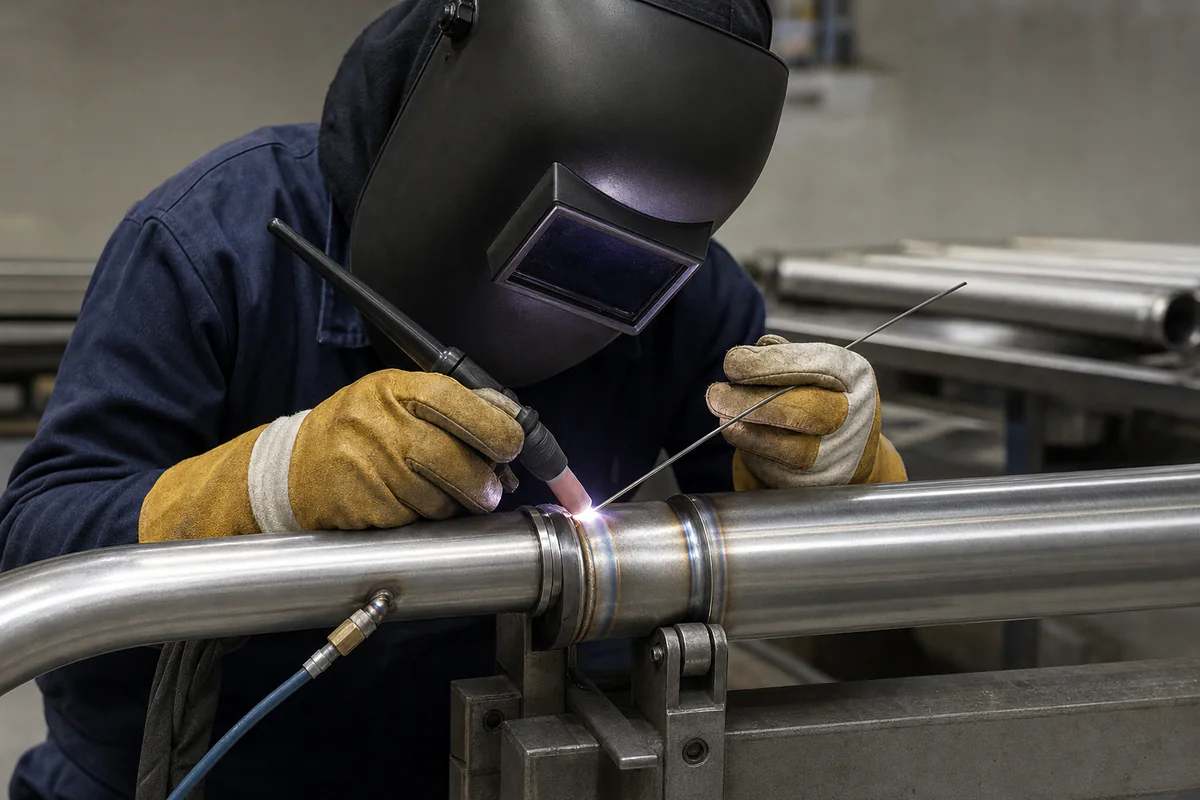
Treat published process, heat-input, interpass and filler guidance as technical input to procedure development, not as a standing shop instruction for every product, joint or code.
The project welding engineer must select and approve:
- base-material grouping and traceability;
- joint design, process, position and backing;
- filler classification and designation;
- WPS/PQR coverage and essential variables;
- pre-weld preparation, heat input and interpass controls;
- sequence, restraint and distortion plan;
- any post-weld treatment;
- inspection method and acceptance standard.
If the supplier proposes a procedure, the purchase package must say who reviews and approves it. A change in base-material standard, thickness range, joint access or process may require re-evaluation. Production weld records should be connected to the approved WPS and the part or weld map.
Dissimilar joints need a separate service check. Expansion behavior, dilution, filler choice, temperature on each side and the weaker member can control the design. Identify both base metals and require the responsible welding authority to approve the joint and filler through the project procedure.
Product Forms
253MA can be supplied in more than one product form, including seamless tube and pipe and flat products. Never infer that a tube property or dimensional possibility automatically applies to plate, sheet, bar, forging or a finished assembly.
For each enquiry, define:
| Order field | Required decision |
|---|---|
| Grade | 253MA / UNS S30815 / EN 1.4835 wording accepted by project |
| Standard | Product standard and edition for the chosen form |
| Form | Plate, sheet, coil, strip, pipe or tube, bar, forging or drawing-based part |
| Dimensions | Nominal and minimum requirements, tolerances and cut lengths |
| Condition | Heat treatment, surface and edge condition |
| Testing | Required standard tests and purchaser options |
| Documents | MTC type, traceability, inspection reports and approvals |
Use the product-form guide before sending the RFQ. Ask the supplier to confirm the entire combination rather than answering only whether “253MA is available.”
Confirm how properties and tests are assigned to the delivered form. A seamless tube data source may use different dimensional definitions, test units and heat-treatment evidence from flat products or bar. For a drawing-based assembly, identify which items arrive with individual MTC traceability and how that identity is transferred after cutting. If the quotation proposes an alternative starting form, the buyer’s design team should approve its standard, condition and effect on the design before purchase.
Quantity can also change what is practical to supply. Trial pieces, minimum production quantities, cut-size yield and replacement allowance should be discussed explicitly, without presenting a mill envelope as live stock. The commercial line should say whether material is offered from a confirmed heat, subject to mill production or conditional on final dimensional review.
Comparison Workflow
Compare 253MA with 310S or another candidate by failure mechanism, purchasable form and governing standard—not by a single alloy percentage or catalogue temperature.
- Confirm identity. Use the accepted identifiers and the product standard for the order.
- Define service. Record metal temperature, time, cycling, atmosphere, deposits and upset cases.
- Define mechanical duty. Record load, pressure, restraint, section, allowable deformation and code basis.
- Review joining and fabrication. Check geometry, dissimilar joints, WPS/PQR responsibility and inspection access.
- Confirm supply. Compare available form, dimensions, condition, quantity, testing and documentation.
- Approve. Have the authorized engineering function record the material decision and any conditions.
A comparison matrix should use “confirmed,” “requires review” and “not available” rather than vague ratings. If evidence applies to one producer form only, label that boundary. Commercial evaluation can follow after both material specifications meet the technical and documentation requirements; do not claim universal cost or life-cycle savings.
Keep a basis column beside every comparison statement. The governing standard and design code support contractual and calculation requirements, while project operating records define the real service profile. Where a test applies to one material form or atmosphere, do not broaden it silently. Record the gap and assign an owner to close it.
The final selection record should name the accepted grade and form, rejected or conditional alternatives, service assumptions, design rules, fabrication conditions, inspection obligations and approving function. Purchasing can then reproduce that decision in the order rather than reducing it to a trade name.
Turn the 253MA Selection into an RFQ
For a 253MA enquiry, Hechuang can turn the supplied design and purchasing inputs into a clear material, processing, inspection and document offer.
Hechuang Stainless Steel can review the enquiry for material specification, form, dimensions, processing scope, inspection and documents. The buyer supplies the engineering decision basis and approved drawing. The review output should identify:
- inputs received and drawing revision;
- proposed starting material and standard;
- confirmed or conditional dimensional requirements;
- processing steps and subcontracted scope, if any;
- welding-document responsibilities;
- inspection methods and witness points;
- MTC, traceability and final dossier;
- deviations requiring written approval.
The buyer’s design team approves material selection, substitutions, procedure choices and acceptance criteria. The approved purchase order and drawings then become production inputs.
Use the 310S grade page when that grade is part of the comparison, then define the required processing services, inspection scope and product form. Put the approved choice and project requirements into the drawing and purchase order.
RFQ Checklist
Copy and complete:
- Identity: commercial name: [ ]; UNS / EN identifier: [ ]; product standard and edition: [ ]; substitution prohibited or approval process: [ ].
- Service: process temperature: [ ]; metal temperature basis: [ ]; peaks and duration: [ ]; cycle sequence and count: [ ]; design duration basis: [ ].
- Environment: gas composition and ranges: [ ]; pressure: [ ]; moisture or dew point: [ ]; carbon / sulfur / nitrogen / halide inputs: [ ]; deposits and cleaning: [ ].
- Mechanical duty: design code: [ ]; loads: [ ]; pressure: [ ]; restraint: [ ]; allowable deformation: [ ]; section allowance: [ ].
- Product: form: [ ]; dimensions and tolerance: [ ]; condition and surface: [ ]; quantity: [ ]; finished or starting material: [ ].
- Drawing: number and revision: [ ]; datums: [ ]; forming: [ ]; joints: [ ]; machining allowance: [ ]; inspection access: [ ].
- Welding: WPS/PQR owner: [ ]; filler approval owner: [ ]; process and qualification basis: [ ]; production records: [ ]; NDE acceptance: [ ].
- Inspection: incoming: [ ]; in-process: [ ]; final dimensional: [ ]; NDE method and extent: [ ]; witness or hold points: [ ]; third party: [ ].
- Documents and delivery: MTC: [ ]; traceability: [ ]; report package: [ ]; marking: [ ]; packing: [ ]; destination and Incoterm: [ ]; schedule: [ ].
Prepare the atmosphere schedule, approved drawing and any governing specification. Mark unknowns explicitly for technical review.
Conclusion
253MA becomes a practical candidate when its grade identity, alloy concept and technical data are matched to the actual service and order. Keep oxidation separate from load-bearing design, check the atmosphere and cycle, qualify fabrication and welding, and confirm the exact product form. The project design team sets design temperature, procedure approval and material acceptance.
Send your dimensions and requirements through the full RFQ form; drawings and specifications can be attached optionally. Hechuang Stainless Steel can confirm the proposed supply and processing plan, inspection scope and document package for the enquiry. Include the approved service and design requirements so our offer can address the actual component.
Frequently asked questions
Is 253MA an AISI grade number?
No. 253MA is a commercial grade name associated with UNS S30815 and EN 1.4835; the purchase order must also identify the governing product standard, product form, condition and documentation.
What is the maximum safe design temperature for 253MA?
A published temperature statement cannot establish a safe component design temperature. The responsible engineer must evaluate stress, time, creep or other applicable failure modes, atmosphere, cycling, section, joints and the governing design rules.
Is 253MA always better than 310S?
No. Compare the real service profile, design basis, atmosphere, cycling, fabrication and available product specification. A general grade ranking can hide the mechanism that controls the component.
Can air-oxidation data be used for a carburizing furnace?
Not without a separate atmosphere review. Carbon activity, oxygen potential, gas composition, deposits and cycling can change the material response. Use evidence relevant to the actual environment.
Who chooses the welding filler for 253MA?
The project welding engineer should select and approve filler through the project WPS/PQR and service assessment. A producer recommendation or supplier proposal is only an input.
What information is needed for a 253MA quotation?
Prepare the designation and product standard, form and dimensions, condition, quantity, service and design inputs, drawing, processing and joining scope, tolerances, inspection, MTC, marking, packing and destination.
Technical Sources
Technical references apply to the material designation, product form and condition described here. They do not certify an individual delivery; the order and material certificate identify the supplied material.
Build Your Enquiry
Open the relevant grade and product pages, then send the exact designation, standard, form, dimensions, quantity, processing and inspection scope to the sales team.