
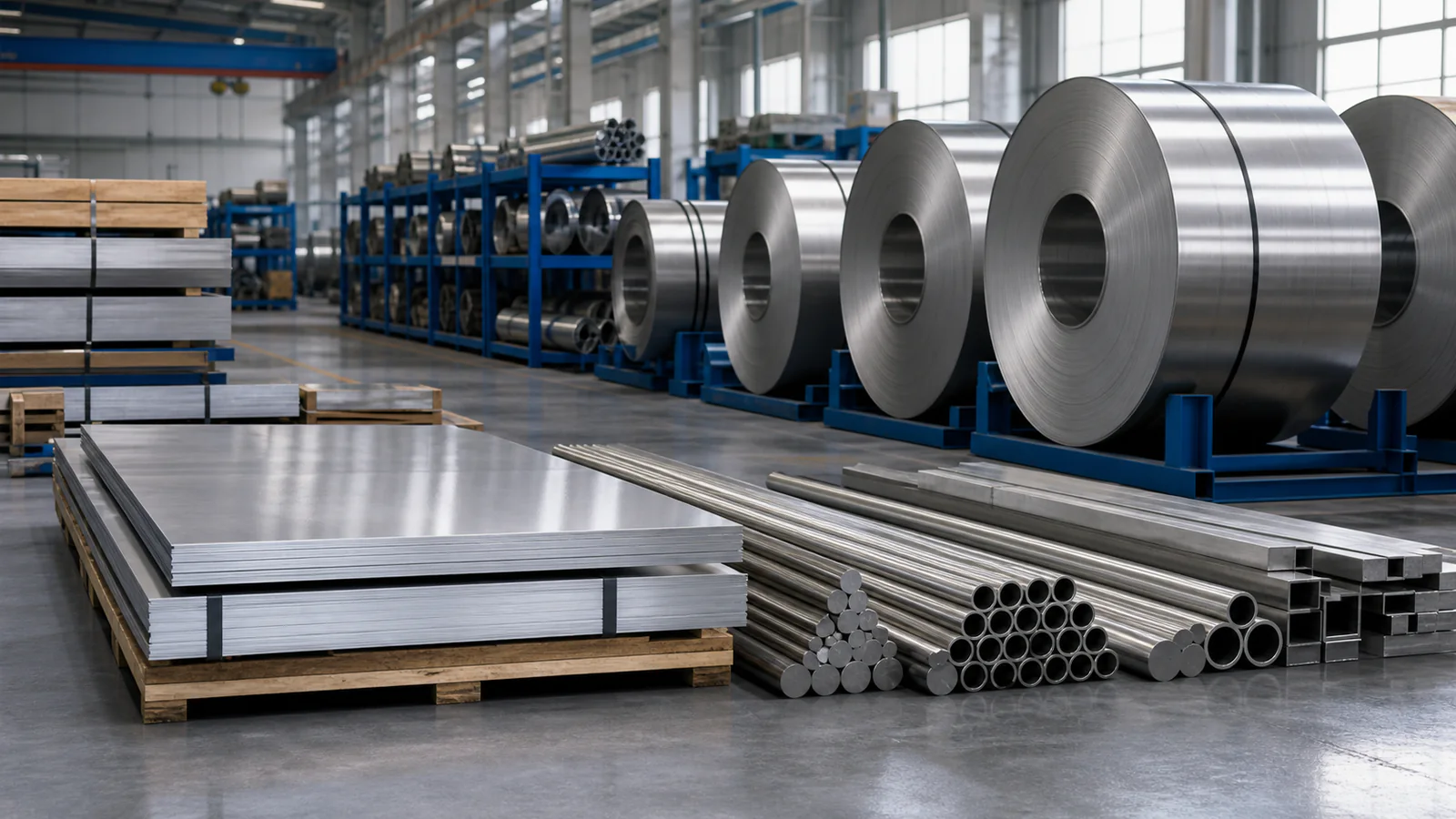
Start with what the buyer must receive, then work backward to the most practical source material. A rigid cut profile may begin as plate; a narrow repeat feed may begin as strip; a finished ring may come from plate, bar or a forging depending on geometry, working direction, allowance and inspection. This guide compares plate, sheet, coil, strip, pipe or tube, bar, forgings, flanges, fittings and custom parts without treating one source form as interchangeable with another.
Quick Facts for Buyers
- Product-standard families
- ASTM publishes separate families for flat, tubular, bar, forging and fitting products
- Flat-product forms
- Plate · sheet · coil · strip
- Seamless tube and pipe
- Seamless pipe dimensions and listed heat-resistant grades
- Long and forged products
- Hot-rolled and forged bar options · round-bar and forged-flat size ranges
- Fitting and flange products
- Fitting and flange product specifications
Selection Matrix
Start with the shape the buyer needs to receive
Use the delivered geometry and downstream process to narrow the starting form. If two forms are practical, compare them as separate offers rather than hiding yield or machining differences.
Product / condition: Buyer selection guidance only. It is not a stock list or a merged dimensional specification.
Applicability: Grade, standard, dimensions, quantity, condition, processing and inspection remain subject to product/order confirmation.
Product-form selection matrix for heat-resistant stainless enquiries Delivered need Starting form to review Key RFQ inputs Rigid flat component Plate or sheet State thickness, flatness, finish, cut or finished scope and packing. Continuous or narrow feedstock Coil or strip Add coil data, edge, camber, downstream process and package restrictions. Hollow flow or structural section Pipe / tube State pipe/tube, construction, OD or NPS, wall or schedule, ends and tests. Machined solid or worked shape Bar or forging Add condition, allowances, heat treatment and test locations. Piping connection or drawing part Flange, fitting or custom part Define rating, schedule, ends, drawing revision, finished inspection and marking.
The table helps choose what to price first. If more than one starting form is practical, ask for separate quotation lines so cost, yield, tolerances and inspection remain visible.
Work backward from one finished item
Teaching example: Suppose the buyer needs a welded furnace tray with a flat base, formed sides, machined drain holes and replaceable tubular runners. The tray is not one product form. The base may start as plate when stiffness and machining allowance control; the sides may start as sheet or cut-to-length coil when bending and surface consistency matter; the runners need a defined tube product; and small lugs may be cut from bar or plate. The RFQ should therefore contain separate lines that converge on one drawing.
For each line, state the delivered stage: mill material, cut blank, formed detail or assembled part. Then add the dimensions that control yield and fit, including grain or rolling direction when bending depends on it, edge condition where welding follows, and machining allowance where finished size is achieved later. This backward method prevents a finished-part label from hiding four different starting standards, tolerances, inspection points and lead-time drivers.
Plate
Use plate for rigid flat sections
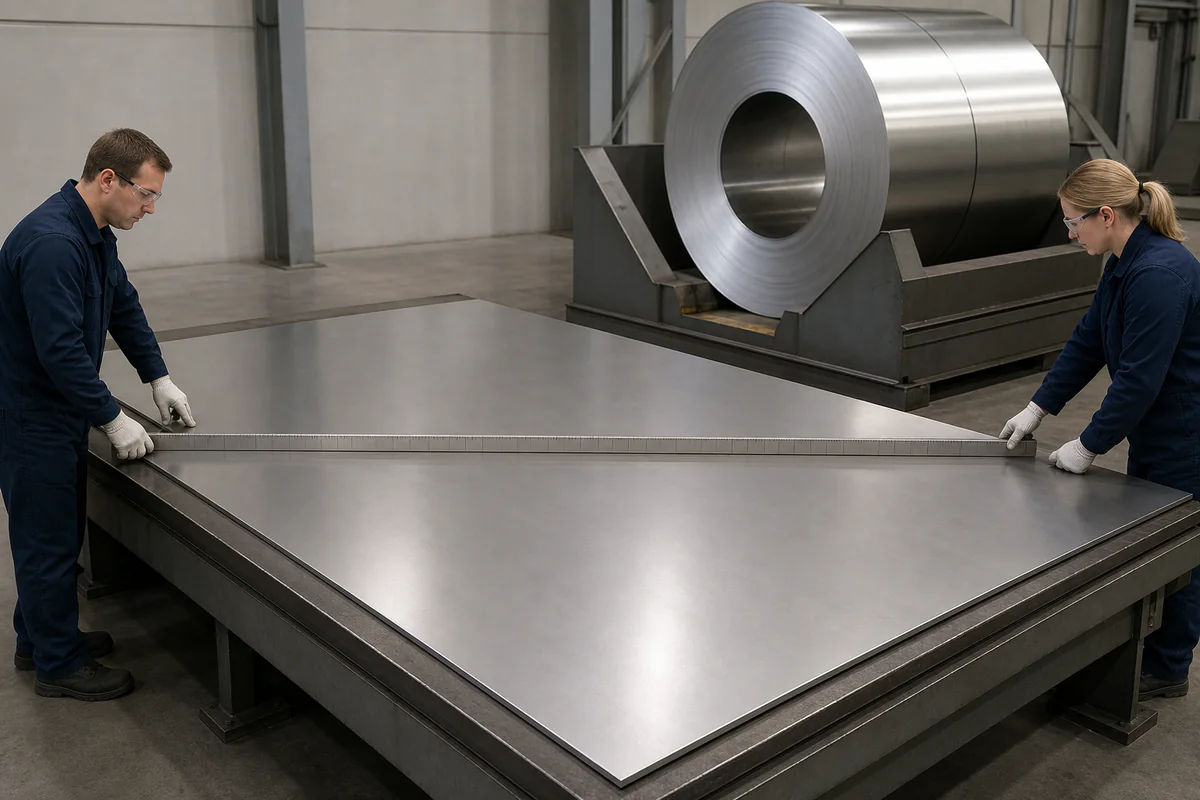
Plate is a practical starting form for furnace panels, supports, baffles, base components and machined profiles that need a comparatively rigid flat section. The buyer should state thickness, width, length, grade, governing flat-product standard and edition, delivery condition, surface, edge and flatness requirements. Identify whether the dimensions describe mill plate, a cut blank or a finished part.
The purchase requirement changes when cutting, beveling, rolling, drilling or machining is included. Add machining allowance and finished tolerances separately from mill tolerances. If the part will be formed, provide bend direction, inside radius and grain-direction requirements where applicable. For welded assemblies, show joint preparation and identify whether the supplier delivers loose parts or an assembled item.
If the supplier delivers more than mill plate, state the finished dimensions and inspection scope separately. Browse the plate product page before preparing the line item.
Sheet
Separate sheet finish from finished-part geometry
Sheet is often selected for thinner liners, covers, shields, duct components and formed panels. Compared with plate, the purchase decision can place more emphasis on surface finish, protective film, flatness, edge condition and handling. State thickness, width and length and identify whether the requirement is full sheet, cut blank or finished formed component.
Do not assume that a finish label defines roughness, appearance, grain direction or film. Write the visible requirement and any approved sample or reference. If laser cutting, punching, forming or welding follows, include the drawing revision, datum scheme, hole and cutout details, bend direction and acceptable heat tint or finishing requirements.
Thin sheet can distort during cutting, forming, welding and packing. Use mill tolerances for full sheet and drawing tolerances for a processed part. See the sheet product page.
Coil
Define the coil as material and as a handling unit
Coil can support continuous fabrication, slitting, blanking and forming when the buyer or processor needs repeat feedstock. State thickness, width, grade, standard, condition, finish and edge, together with inside diameter, outside-diameter or weight restrictions when they affect equipment or logistics. Identify acceptable coil weight and whether one heat, one coil or split coils are required.
The coil specification must match the downstream line. Camber, crown, flatness after uncoiling, telescoping, edge quality and welds can matter differently for each process. Ask the supplier to confirm which controls apply under the governing standard and which additional requirements need separate agreement. Do not combine the most favorable figures from different producer data sets into one unreviewed requirement.
Treat the coil as a handling unit: state weight limits, eye orientation and edge protection. If it will be slit or blanked, preserve identity on daughter coils or parts. Review the coil product page.
Strip
Control width, edge and process stability
Strip is a focused product form for narrow-width feedstock, springs, clips, formed sections, furnace components and repeated precision parts. The enquiry should define thickness, width, coil or straight-length supply, condition, finish, edge type, camber, flatness and any mechanical or forming requirements from the governing specification.
Cold-rolled sheet and strip data confirms that this product form is available, but the actual combination of heat-resistant grade, gauge, width and tolerance still needs producer confirmation. Special thin gauges or tight tolerances can change the mill, minimum quantity, processing requirement and lead time. State the downstream process so the supplier can review whether slit edge, deburred edge or another preparation is appropriate.
State where tight width or thickness tolerances are measured and how slit lots remain identified. The strip product page provides the related enquiry fields.
Pipe / Tube
Define the tubular product before entering dimensions
Pipe and tube are not complete descriptions without a product standard and construction method. State whether the project requires pipe or tube, seamless or welded construction, outside diameter or NPS, wall thickness or schedule, length, ends, condition and heat treatment. Add pressure, temperature, process media and code requirements when engineering needs them to select the applicable specification.
Published seamless-tube data supports planning within its stated scope. It does not prove that every heat-resistant grade, diameter and wall combination is available. A welded alternative should be quoted separately with its own standard, weld method, heat treatment, examination and dimensional basis for review.
Add only the examinations required for the selected pipe or tube specification and service. State ends and bore cleanliness on the pipe and tube product page.
Bar
Match section, condition and machining allowance
Bar is a source form for shafts, pins, hangers, supports, fastener blanks and machined components. State round, square, hexagonal, flat or another section; diameter or section dimensions; length; grade; product standard; hot-worked, cold-finished, peeled, ground or other required condition; surface; straightness; and dimensional tolerance.
Long-product data shows available manufacturing forms, not a single universal bar program for every grade. Heat-resistant grade availability, size, condition, testing and quantity must be reviewed together. If the bar will be machined, provide finished geometry and allowance. If it will carry load at temperature, engineering should define the governing design and material requirements rather than using a flat-product description.
If bar is only the machining stock, separate bar condition and allowance from the finished-part tolerances. See the bar product page.
Forgings
Start with the drawing and manufacturing plan
Forgings need more than a finished diameter. Prepare the controlled drawing, blank and finished dimensions, section transitions, machining allowance, quantity, grade, forging product standard, heat treatment, surface condition and any required forging ratio or process qualification. State which dimensions are as-forged and which are finished.
Published special-metallurgy data supports forged-product context. Availability still depends on the requested grade, section and test plan. Ask the supplier to identify the starting material, forging method, heat-treatment condition, test location and machining sequence for the actual part. Engineering should approve any manufacturing-plan change before order acceptance.
Test locations and machining allowance are part of the forging purchase specification, not afterthoughts. The forgings product page lists the main drawing inputs.
Flanges
Order the complete connection geometry
A flange enquiry should name the governing standard, type, DN or NPS, Class or PN, facing, bore, outside dimensions where drawing-controlled, thickness, bolt pattern, grade, heat treatment and quantity. Identify weld-neck, slip-on, blind, threaded, socket-weld, lap-joint or special flange without relying on a generic “flange” line.
Product information supports stainless flange and pressure-class selection. The applicable standard and project specification still control dimensions and acceptance. For a special flange, provide a drawing with datum, tolerances, facing finish, weld preparation, machining allowance and marking. Do not assume that a standard outside diameter proves the required bore, facing or heat-resistant grade.
Protect the facing and identify matched or drawing-specific pieces. Use the flanges product specification to prepare the connection details.
Fittings
Define type, ends and dimensional standard
Fittings require the component type and the piping basis. State elbow angle and radius, tee or reducer configuration, cap or stub-end type, seamless or welded construction where applicable, NPS or DN, schedule or wall, end preparation, grade, product standard, dimensional standard, heat treatment and quantity.
Butt-welding fitting information covers seamless and welded products. That information does not make every type, wall, dimension and grade available as one item. Ask the supplier to identify the proposed starting product and manufacturing method. For nonstandard geometry, submit a controlled drawing and treat the item as a drawing-based component.
Keep bevels, ends and piece identity protected through packing. See the fittings product page for the form-specific fields.
Custom Parts
Connect the finished part to its source form
Custom parts can combine plate, sheet, coil, strip, tube, bar, a forging, flange or fitting with cutting, forming, welding, machining and finishing. Prepare a controlled drawing or model with revision, units, datum scheme, grade, product standard, finished dimensions, tolerances, quantity, surface, weld requirements, heat treatment, inspection, marking and packing.
Ask the supplier to identify the proposed source form. That decision affects material yield, grain or working direction, allowances, heat treatment, traceability, inspection access and cost. A machined ring from plate is not automatically the same purchase as a rolled ring or forging, even when the finished outline looks similar.
Separate material acceptance from finished-part acceptance. The MTC supports the source material; dimensional, weld, NDT and surface records support the processing scope. Define who approves drawing questions and deviations before work starts. Protect critical faces and use item-level marking or a packing map where needed. Continue with the custom-parts product specification.
Product Form and Tolerance Implications
Keep mill and finished tolerances separate
The selected form controls which product standard applies and which dimensions the mill can certify. Processing creates a second acceptance layer. A plate thickness tolerance does not define a machined step; a tube wall tolerance does not define an assembly centerline; a forging blank tolerance does not define a finished bore.
Write mill-product dimensions and finished-part dimensions in separate fields. Use drawing tolerances for cut, formed, welded or machined features. If a general tolerance is permitted, identify its standard and class. Highlight critical-to-function features and define how they are measured. Ask the supplier to list any measurement-access limitation.
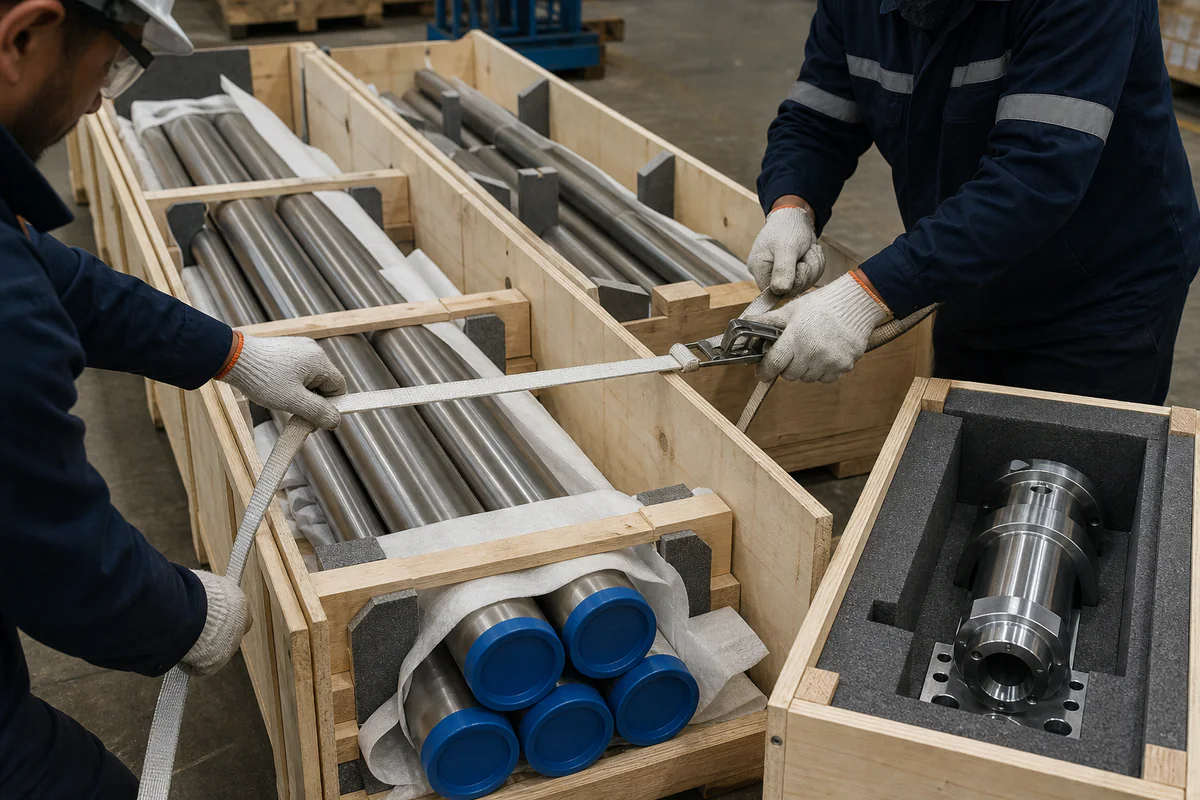
The starting form also determines practical handling: coil needs daughter-coil identity, tube needs bore and end protection, forgings need piece records and machined flanges need face protection.
Define Form, Processing and Delivery
Build one form-to-delivery chain
Build the enquiry from component need to delivery in this order:
- define the component function, environment, geometry and design authority;
- choose the closest purchasable form and governing product standard;
- separate mill dimensions from processed or finished dimensions;
- add condition, surface, processing, heat treatment and allowance;
- define material, dimensional, weld, NDT and third-party inspection;
- preserve heat or lot identity through cutting and fabrication;
- design packing for the chosen geometry, finish and transport plan; and
- obtain a quotation that identifies the offered mill, product form, manufacturing method and deviations.
The preferred product form or process may change after the supplier reviews the actual grade, standard, dimensions, quantity, inspection and schedule. Record an approved change in the quotation and purchase order before material is cut or processed.
RFQ Checklist
Send one complete line for each form
Use placeholders until the real project fields are known:
[grade] to [governing product standard and edition], [product form and construction method where applicable], [mill dimensions] and [finished dimensions if processed], [condition and surface], [quantity and unit], [processing and heat treatment], [inspection and MTC], [marking and traceability], [packing], delivery to [destination] under [Incoterm] by [required date].
See our ordering guide for sample, delivery, payment and packing options. The quotation confirms the terms for your grade, product form and processing requirements.
Conclusion
The product form is part of the technical specification. Plate, sheet, coil, strip, pipe or tube, bar, forgings, flanges, fittings and custom parts require different standards, dimensions, processing, inspection, traceability and packing controls.
Choose the form from the component need, then complete the grade, governing standard, condition, dimensions, quantity, processing and document package. Use product pages to prepare the enquiry, not item-level availability. Keep mill tolerances separate from finished-part tolerances and record any approved specification change before work begins.
Send your dimensions and requirements through the full RFQ form; drawings and specifications can be attached optionally. Hechuang will review the summary against the relevant product and manufacturing plan and reply within one business day; material availability, sample timing, production timing and commercial terms remain subject to the actual enquiry and written order.
Frequently asked questions
Should a buyer specify plate or sheet for a cut flat part?
Choose the product form that matches the required thickness, finish, flatness, tolerances, processing and governing product standard. Do not use only a commercial nickname; ask the supplier to confirm whether the offer is plate or sheet.
Are coil and strip interchangeable?
No. Strip is normally purchased for controlled narrow width and edge requirements, while coil can be a wider feedstock or finished supply form. State width, thickness, coil data, edge, finish and downstream process.
What is the first decision for pipe or tube?
State the governing product standard and whether the project requires pipe or tube, then define seamless or welded construction, OD or NPS, wall or schedule, length, ends, condition and tests.
When should a forging be requested instead of bar?
Use engineering and the governing specification to decide. A forging may suit geometry, section transition, directional working or inspection needs, but it requires a drawing, allowances, heat treatment and an approved manufacturing plan.
How should a published maximum size be used?
Use it as an initial size reference, then send the grade, standard, exact dimensions, quantity, condition, processing, inspection and required date so we can confirm current availability.
What should be sent for a custom heat-resistant stainless part?
Prepare a controlled drawing or model with revision, grade, standard, datum scheme, dimensions, tolerances, quantity, source-form preference, processing, welding, inspection, marking, packing and destination.
Technical Sources
Technical references apply to the material designation, product form and condition described here. They do not certify an individual delivery; the order and material certificate identify the supplied material.
Build Your Enquiry
Open the relevant grade and product pages, then send the exact designation, standard, form, dimensions, quantity, processing and inspection scope to the sales team.