
Seamless and welded 310S pipe can both be valid when the governing documents permit them. The practical differences are the longitudinal seam, the extra weld-related ordering and inspection details, and the supply variables behind each quotation. Compare the routes only after their shared requirements have been aligned.
Quick Facts for Buyers
- Route decision
- The governing documents decide whether seamless, welded or either route is permitted
- ASTM A312/A312M test basis
- Hydrostatic test or nondestructive electric test
- Welded class detail
- State the applicable class and seam-examination coverage
- Dimension basis
- NPS and schedule, or OD and wall thickness
- Quotation comparison
- Align testing, documents, processing and dispatch basis before comparing price
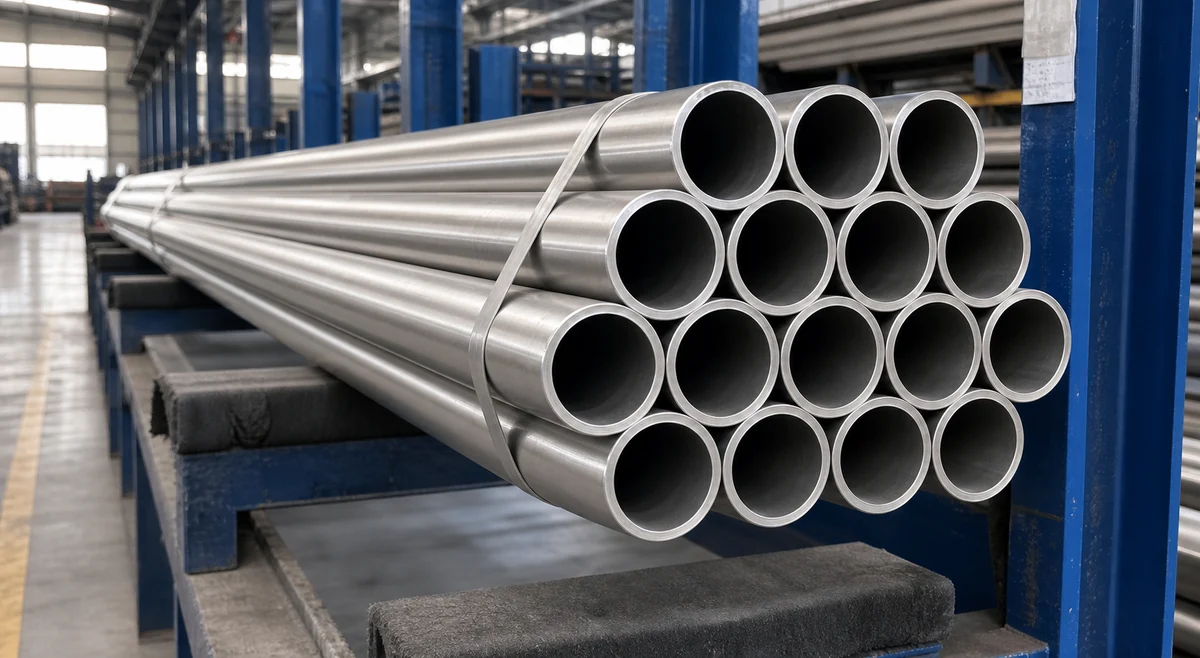
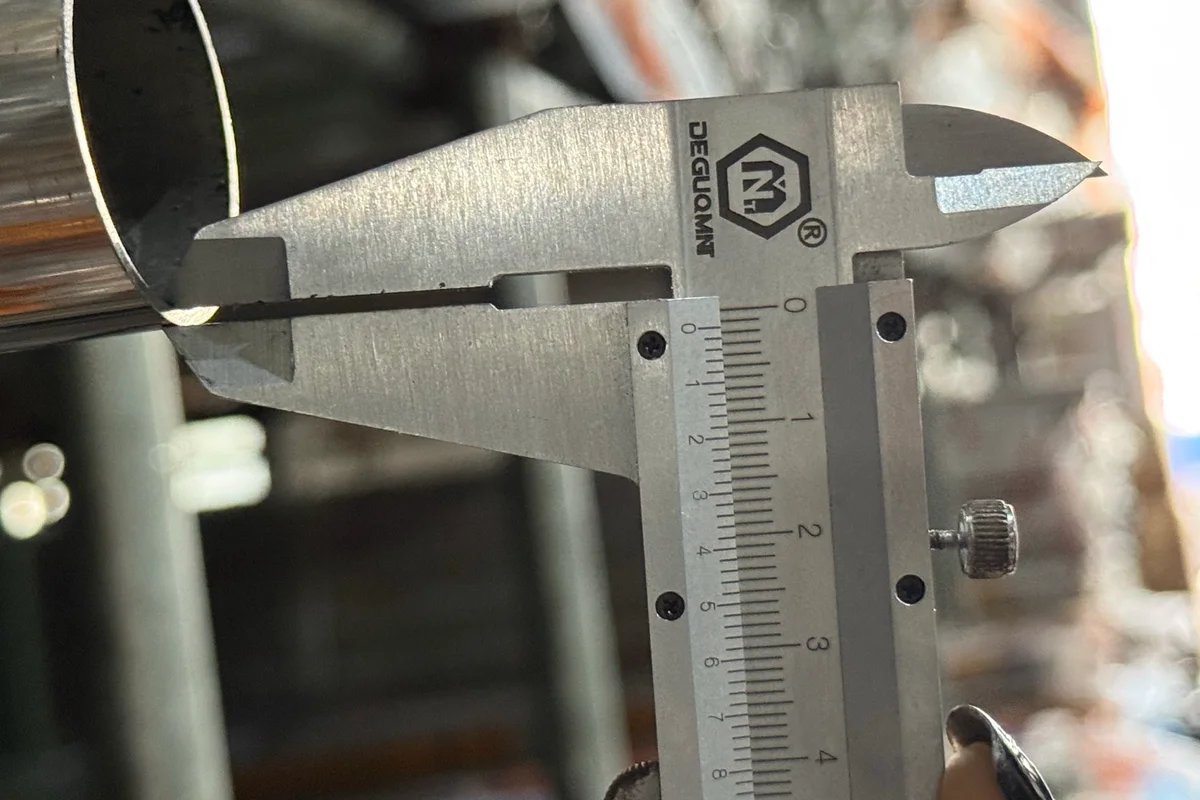
What actually changes between seamless and welded 310S pipe?
Before sending a request for quotation (RFQ), align the requirements both routes must meet: product standard and edition, grade, dimensions such as nominal pipe size (NPS) or outside diameter (OD), heat-treatment condition, required pressure or nondestructive testing (NDT), and documents.
| Comparison point | Seamless 310S pipe | Welded 310S pipe |
|---|---|---|
| Manufacturing structure | Produced without a longitudinal welded seam | Formed from flat material and joined along a seam using the welding method and, where applicable, class required by the product standard |
| Extra ordering information | State if the project fixes seamless construction or imposes a route-specific production condition | State the applicable welding process or class, seam heat treatment, examination coverage, acceptance criteria and reports where required |
| Inspection difference | Receives the product-standard tests and any supplementary requirements, but has no longitudinal seam to examine | Receives the common product tests plus the seam-specific examination required by the selected standard, class and project specification |
| Different supply variables | Availability in the specified dimensions and quantity, the seamless production route, cutting, supplementary testing and mill schedule | Availability of the permitted welded route or class, forming and welding schedule, seam examination, cutting and mill schedule |
Use the project position that applies:
- The project requires seamless construction. Request a seamless quotation. Treat another construction route as an alternative only after separate approval.
- The project permits either route. Apply the same project acceptance conditions, close every technical gap, and compare complete quotations and the dispatch date each supplier can confirm.
- Only 310S, dimensions and quantity are known. Send the available information and state that the product standard and inspection route are not yet fixed. Hechuang can flag the missing purchasing information and review available supply options.
Which option costs less and which can ship sooner?
Before comparing prices, check what each quotation includes. Confirm how chargeable weight is calculated, how cutting losses are charged, and whether end preparation, contract-required testing, reports, packing and freight are included. Compare offers under the same trade scope.
For dispatch timing, ask whether the pipe will come from available stock, available stock that still needs processing, or mill-order production. If the quotation depends on incoming mill material, show that separately. Confirm that the stated availability covers the specified grade, product form, dimensions and quantity, and that cutting, inspection, documents and packing are included in the schedule.
Keep the date when the material will be ready for dispatch separate from international transit and destination delivery. Compare quotations from the same starting point, including when lead time begins and which approvals must be complete. Our quotation will state how the pipe will be supplied, what processing and inspection are included, which reports you will receive, and when the material will be ready for dispatch.
Check service suitability before choosing the route
Selecting seamless or welded construction does not establish that 310S is suitable for the component. Review actual metal temperature, atmosphere, load, restraint, thermal cycling, expected deformation, corrosion mechanisms and the applicable design code. Furnace or process-gas temperature is not automatically the metal design temperature, and product-standard compliance is not the same as pressure-code approval.
Use the 310S high-temperature service guide to organize the service inputs. Final design-code and material approval remain with the responsible engineer.
How the product standard changes the route and inspection
ASTM A312/A312M-25 covers seamless, straight-seam welded and heavily cold worked welded austenitic stainless steel pipe. Each pipe is subject to a hydrostatic test or a nondestructive electric test in accordance with the specification. This does not mean that every pipe receives both tests, or that ultrasonic testing and radiography are universal requirements.
ASTM A358/A358M-24a covers electric-fusion-welded austenitic chromium-nickel stainless steel pipe and separates it into five classes. Manufacturing and radiography provisions vary across those classes. In one specific comparison, Class 1 and Class 5 pipe are both double welded using filler metal in all passes; Class 1 is completely radiographed, while Class 5 receives spot radiography. An RFQ that says only “ASTM A358” is incomplete when the class and supplementary requirements have not been resolved.
Tube standards further show why the product standard comes first. ASTM A269/A269M-25 covers general-service stainless steel tubing and includes seamless and welded routes. ASTM A213/A213M-25 covers seamless boiler, superheater and heat-exchanger tubes. Do not replace an application-specific standard with a different general pipe or tube standard merely because the grade name is similar.
ASTM A999/A999M-23 provides general requirements used by alloy and stainless steel pipe product specifications. The governing product specification and order still control the applicable requirements.
Where required, state the applicable EN 10204 inspection-document type in the RFQ.
Build the inspection line from the governing product standard, project specification and drawing:
- construction, welding process or class where applicable;
- seam-examination method and coverage for welded material;
- acceptance standard or acceptance criteria;
- selected pressure or NDT route and any supplementary examination;
- inspection certificate, report format and heat-number traceability;
- third-party witness or hold points, if required.
Do not copy “100% UT, RT and hydro test” into every RFQ. These methods do different jobs, and unnecessary or conflicting requirements can delay a quotation. If the end user has an inspection and test plan, send it with the inquiry. The 310S welding and fabrication guide explains the separate role of welding controls for fabricated components.
Dimensions and tolerances to put on the RFQ
The words “4-inch 310S pipe” are not enough for a reliable quotation. State dimensions using the convention of the governing product standard and drawing:
- pipe or tube;
- NPS and schedule, or OD and wall thickness;
- whether wall thickness is nominal, minimum or average where the standard distinguishes them;
- fixed length, random length or cut lengths;
- any OD, wall, length, straightness or ovality limits stricter than the product standard;
- end condition, such as plain, beveled, threaded or drawing-defined preparation;
- quantity by length, piece or total mass;
- bending, drilling, welding, machining or assembly required after supply.
Where an ASTM standard has separate SI and inch-pound provisions, identify the required system and edition. Put critical dimensions and tolerances on the drawing. For an assembly, include fit-up dimensions, end preparation and any inside-surface access restrictions. For bending or forming, provide the centerline radius, straight-leg lengths and final inspection dimensions.
Pipe, tube and grade naming
Use the product name that belongs to the selected standard. “Pipe” and “tube” are not safe substitutes in a purchase order, even when the physical shape looks similar. The standard determines the dimensional system, manufacturing route, tests and acceptance requirements.
310S is commonly identified by UNS S31008, but the exact order designation must follow the selected product standard. Some ASTM tubular specifications use the prefix TP, so an order may call for TP310S when that standard applies. ASTM A312/A312M-25 describes TP310H as a modification of TP310S for service where creep and stress-rupture properties matter. Do not substitute TP310H for TP310S, or vice versa, without checking the grade requirements and obtaining the responsible engineer’s approval. Do not transfer the TP prefix to another standard automatically, and do not treat a JIS, EN or GB name as an automatic equivalent.
If the project specification gives only “310S,” send the product standard or piping-class sheet with the RFQ. Hechuang can check the requested supply route and flag missing ordering details before quotation.
Illustrative RFQ comparison
This is an illustrative comparison, not a customer order, price claim or pressure-design example. A project permits either construction and gives the same 310S grade, OD, wall thickness and quantity to both suppliers. If the applicable product standards differ, the responsible engineer must permit each standard and confirm that both routes meet the same project acceptance conditions.
| Review step | Quote A — seamless | Quote B — welded |
|---|---|---|
| Initial description | 310S; applicable product standard and edition; agreed OD and wall thickness | 310S; applicable product standard and edition; agreed OD and wall thickness; permitted welded route |
| Wall and length basis | Nominal or minimum wall basis; fixed length and tolerance | Fixed length and tolerance; wall basis still unresolved |
| Examination scope | Product-standard pressure or NDT route; report format still unresolved | Welded class, seam examination, coverage, acceptance criteria and report included |
| Processing and documents | Cut lengths and documents included; end preparation and its charge unresolved | Cut lengths and end preparation included; additional-test charges unresolved |
| Final comparison | Close the report and end-preparation gaps, then compare the complete quotation | Close the wall and test-charge gaps, then compare total price and a dispatch date the supplier can confirm |
The missing item could occur in either offer; the example does not imply that welded supply is lower quality. Record the selected construction and every agreed exception in the purchase order.
What to send for the first quotation
First contact: send what is already known. Before a formal quotation, resolve the items that affect the offered standard, construction, inspection and supply scope:
- Material and product standard: 310S; applicable standard and edition if specified.
- Construction required or permitted: seamless, welded or either route.
- Dimensions, length, quantity and ends: NPS and schedule or OD and wall; length basis; quantity; end condition.
- Drawing or service description: attach the drawing, piping class or equipment specification if available.
- Tests and documents, if known: pressure or NDT route; seam examination for welded material; required material and test reports.
- Destination and target dispatch date: delivery location and required timing.
Hechuang can identify unresolved heat-treatment, wall-basis, tolerance, welded-class, examination, traceability, witness, processing or packing requirements during the first inquiry. Use the 310S MTC and RFQ checklist to finalize material-document and traceability requirements.
Related resources
- 310S pipe and tube supply options
- 310S welding and fabrication guide
- 310S MTC and RFQ checklist
- Hechuang quality and inspection approach
Send Your 310S Pipe RFQ
Have a drawing but an incomplete pipe specification? Send the information already available, including dimensions, quantity, service description, destination and target timing. We will flag missing purchasing information and review available seamless or welded supply options.
Frequently asked questions
Is seamless 310S pipe always better for high-temperature service?
No. The governing product standard, project specification and design code determine whether seamless or welded construction is permitted. ASTM A312/A312M covers several construction routes. Compare options only after material, dimensions, heat treatment, tests and acceptance requirements have been aligned.
Can welded 310S pipe be used when pressure is involved?
Do not decide from the presence of a weld seam alone. The responsible engineer must check the applicable construction code, product standard, welded route or class, design conditions, joint requirements and inspection scope. This purchasing guide does not establish pressure-code acceptance.
Does every welded pipe order need 100% radiography?
No. The required examination depends on the product standard, class and project specification. ASTM A358/A358M uses different classes with different radiography provisions. State the applicable class, examination coverage and acceptance criteria instead of adding a generic test list.
Do seamless pipes still require nondestructive or pressure testing?
Yes. Seamless material still receives the product-standard tests and any supplementary requirements. Under ASTM A312/A312M, each pipe is subject to a hydrostatic test or a nondestructive electric test. This does not mean that every pipe receives both tests.
Should I specify 310S, S31008 or TP310S?
Use the exact designation required by the selected product standard. UNS S31008 identifies the material, while some ASTM tubular product standards use TP310S. TP310S and TP310H are not automatically interchangeable.
What information is most important for a quick quotation?
Send the standard or drawing, pipe or tube, construction preference if fixed, dimensions, length, quantity, ends, required tests, destination and target date. If the standard or inspection route is not yet settled, say so. Hechuang can identify missing purchasing information and check available supply routes.
Technical Sources
Technical references apply to the material designation, product form and condition described here. They do not certify an individual delivery; the order and material certificate identify the supplied material.
- ASTM International — ASTM A312/A312M-25
- ASTM International — ASTM A358/A358M-24a
- ASTM International — ASTM A269/A269M-25
- ASTM International — ASTM A213/A213M-25
- ASTM International — ASTM A999/A999M-23
- DIN Media / DIN Deutsches Institut für Normung e. V. — DIN EN 10204:2005-01 — Metallic Products — Types of Inspection Documents
- Nippon Steel Corporation — Seamless Pipes and Tubes for the Chemical Industry
Check 310S Pipe Availability
Send the applicable standard, seamless or welded requirement, dimensions, quantity, tests, documents and target dispatch date. We will flag any missing purchasing details before quotation.