
Theoretical weight comes from nominal geometry and a stated density; actual weight comes from an identified measurement or order document. Use theoretical mass to estimate quantity, handling and freight before shipment, then compare the supplier’s packing-list, scale or invoice basis with the same line item. Record theoretical mass per piece and per order, measured net mass, package gross mass and invoice weight in separate fields. This prevents a freight figure, receiving measurement or kilogram-priced invoice from being compared with the wrong basis. The six cases below calculate nominal 310S mass without inventing a measured result. Send your exact grade, dimensions, quantity and required commercial weight basis in the RFQ.
Use this result to: Choose and document the commercial weight basis for an order

Use theoretical weight before shipment
Theoretical weight answers: what mass follows from these nominal dimensions and this density? Because the inputs are explicit, a buyer and supplier can check the same calculation. Use it for early budgets, order comparisons, lifting screens and freight estimates. A particular delivered plate's scale weight, measured dimensions and contractual settlement basis come from the order and its inspection or shipping records.
These 310S / 1.4845 examples use 7,800 kg/m³. For every other grade, enter a density confirmed from the applicable material document. Density is part of the calculation definition, so the RFQ worksheet should retain the grade, designation, density value and reference alongside the nominal dimensions and result.
Keep geometry, density and evidence in separate columns
For plate and sheet, theoretical mass equals nominal thickness multiplied by nominal width, nominal length and density after all dimensions are converted to metres. Quantity multiplies the per-piece result. The formula models a rectangular volume; it does not inspect thickness profile, trim condition, holes, cut-outs, edge preparation, protective materials or packaging. Calling the output theoretical is therefore a precise description of its input basis, not a warning that the arithmetic is approximate.
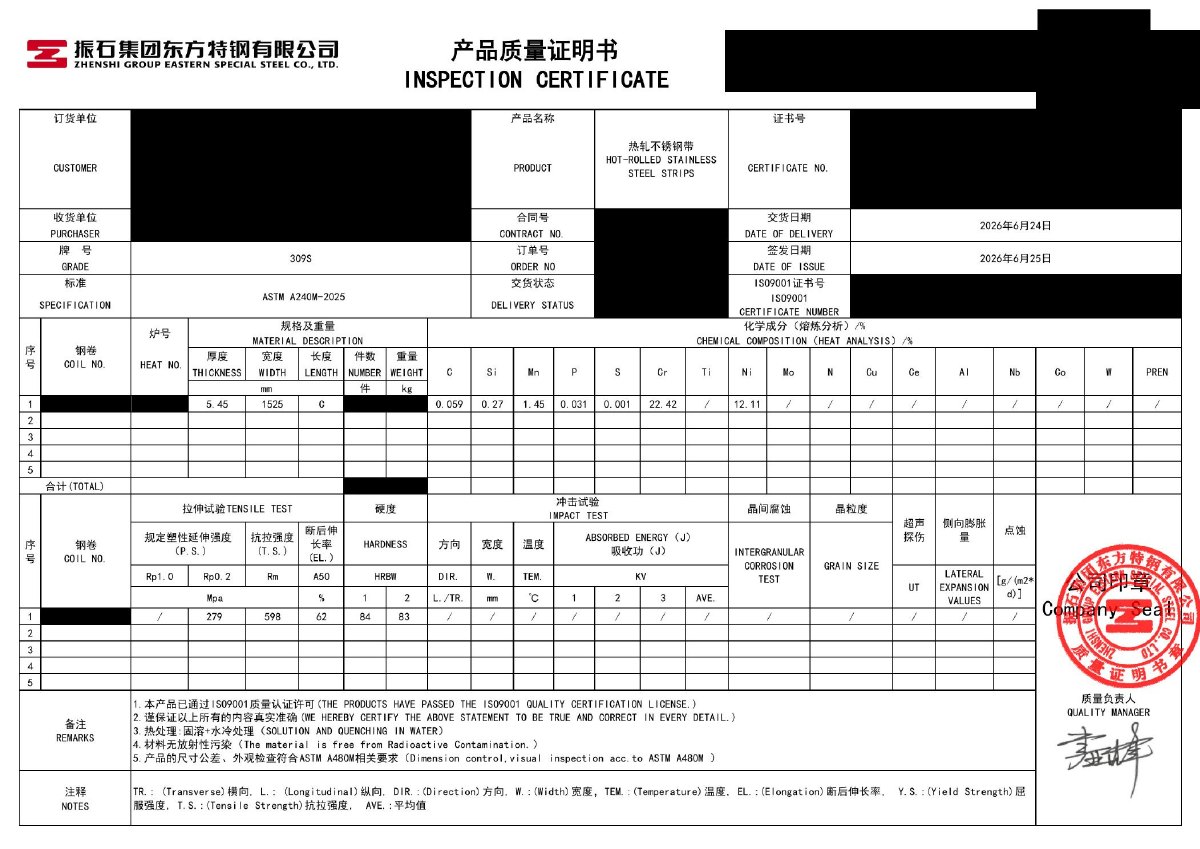
Actual weight should be recorded with its source and scope. A scale ticket may cover one piece, a bundle, a truck or a shipment; a packing list may separate net and gross figures; an inspection record may provide measured dimensions rather than direct mass. A material certificate can support identity or properties but should not be assumed to state the weight needed for every commercial question. Match the evidence to the line item before comparing it with theory.
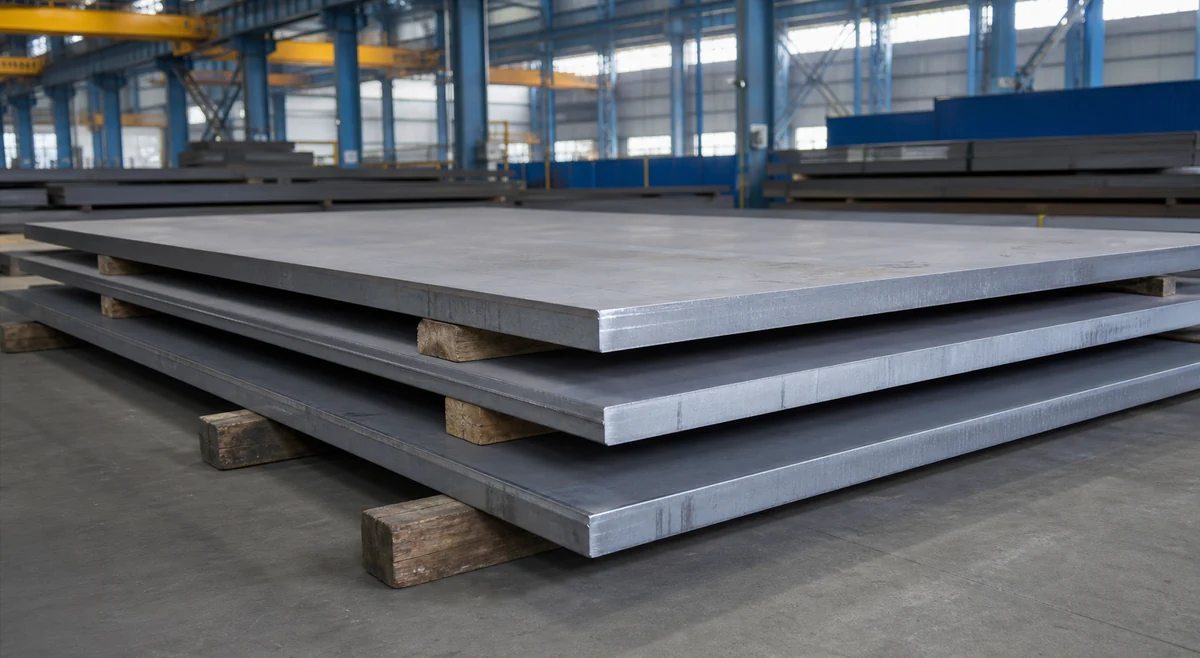
Calculate a nominal 3 × 1,250 × 2,500 mm sheet
Enter plate geometry with 3 mm thickness, 1,250 mm width, 2,500 mm length, quantity one and 310S. The result is 73.125 kg. This is the nominal result for the stated inputs. Use the same geometry and density when checking a supplier calculation, and multiply by a whole-piece quantity for an initial order-mass estimate.
The example intentionally provides no actual mass. If a supplier later reports a measured net weight, record that value, document type, weighing scope and date beside the 73.125 kg theoretical estimate. Any difference is then an observed order fact, not a number manufactured by this guide. A hypothetical higher or lower delta may be used only as a clearly labeled sensitivity exercise; it must never be presented as measured production data.
3 × 1,250 × 2,500 mm sheet
This nominal geometry gives 73.125 kg. Record the actual weight only when the mill, inspection or scale document supplies it.
The example uses the 310S / 1.4845 preset density of 7,800 kg/m³. For another grade, enter the density stated in the applicable material document.
The figures are theoretical results from nominal inputs. Actual dimensions, tolerances and the agreed commercial basis determine delivered or invoiced weight.
Compare six nominal calculations
Each table row varies nominal geometry while keeping the density at 7,800 kg/m³. The output column contains only the theoretical result. Leave the paired actual value open rather than filling it with an assumed percentage or plausible-looking scale number. A procurement team can prepare the worksheet before quotations arrive, then add the supplier's packing, inspection or scale value beside the original estimate.
The six dimensions illustrate how the method scales across sheet and plate cases, but they do not advertise stock, minimum order quantities or mill capability. Rerun the exact purchase description rather than selecting a nearby row. If an offer changes thickness, width, length or cutting scope, create a new labeled calculation. Do not overwrite the original case, because preserving both input sets makes a quotation difference easier to explain and approve.

| Example | Thickness | Width | Length | Density | Theoretical weight |
|---|---|---|---|---|---|
| 3 × 1,250 × 2,500 mm sheet; actual: document required | 3 mm | 1,250 mm | 2,500 mm | 7,800 kg/m³ | 73.125 kg |
| 5 × 1,000 × 2,000 mm plate; actual: document required | 5 mm | 1,000 mm | 2,000 mm | 7,800 kg/m³ | 78 kg |
| 6 × 1,500 × 3,000 mm plate; actual: document required | 6 mm | 1,500 mm | 3,000 mm | 7,800 kg/m³ | 210.6 kg |
| 8 × 1,500 × 6,000 mm plate; actual: document required | 8 mm | 1,500 mm | 6,000 mm | 7,800 kg/m³ | 561.6 kg |
| 10 × 2,000 × 6,000 mm plate; actual: document required | 10 mm | 2,000 mm | 6,000 mm | 7,800 kg/m³ | 936 kg |
| 12 × 2,000 × 6,000 mm plate; actual: document required | 12 mm | 2,000 mm | 6,000 mm | 7,800 kg/m³ | 1,123.2 kg |
Trace the causes of a documented difference
Dimensional variation is one possible cause. Measured thickness can vary across a plate, width and length may reflect the ordered edge or trim condition, and finished dimensions may differ from the nominal rectangle within agreed requirements. The calculator does not choose those requirements. Identify the governing product standard, drawing and purchase-order terms, then compare measured values only when the sampling method and acceptance basis are known. Do not import a simplified tolerance table from another product route.
Processing can also change the comparison. Trimming, sawing, profiling, holes, cut-outs, edge preparation and removal of test material reduce or redistribute metal relative to an untouched nominal rectangle. Surface condition and attached protective material can affect what a scale captures, while packing adds non-product mass to a gross shipment figure. Describe the delivery condition and weigh scope so that a difference is not incorrectly attributed to density or dimensional tolerance.
Use the theoretical total for initial freight and handling screens, then replace or supplement it with confirmed package information when available. Request piece count, package count, net metal weight, gross weight and maximum package mass. A crane or vehicle decision must use the appropriate verified load and operating controls. The calculator is useful for identifying when confirmation is needed, but it is not a weighing certificate, packing list or equipment approval.
Agree which weight controls quotation and invoice
Commercial settlement can follow theoretical weight, scale weight, piece price or another written basis. None is implied merely because a calculator appears in the enquiry. Ask the supplier to state how the quotation is priced, how the order acknowledgement will record quantity, what net and gross values will appear on shipping documents, and which figure will control invoicing. If multiple bases are used, define how they reconcile and what evidence accompanies each shipment.
Measured actual mass is meaningful only with context: calibrated equipment where required, tare treatment, weighing scope, identification and agreed rounding all matter. Likewise, a theoretical figure is meaningful only with its geometry and density. Keep both records instead of converting one label into the other. When a difference exceeds the project's commercial or logistics threshold, investigate the documents and inputs; do not automatically treat the calculated or measured number as erroneous.
Write a checkable weight basis into the RFQ
State grade and designation, product form, governing standard, nominal dimensions, whole-piece quantity, edge and surface condition, processing scope, inspection documentation and destination. Label any calculator output as theoretical planning weight and include its density basis. Ask the supplier to confirm availability and to identify the quotation, packing-list, shipment and invoice weight bases. These steps make offers comparable without claiming that the example sizes are held in stock.
Keep the original theoretical worksheet and add the confirmed supplier documents beside it. Match piece or package identifiers where traceability is required, verify that net and gross figures are not mixed, and record any sensitivity scenario separately from actual results. Resolve significant differences before shipment or invoice approval. Separate labeled columns make the comparison clear.
Prepare your quote request
Frequently asked questions
Is theoretical weight less reliable than scale weight?
They answer different questions. Theoretical weight follows from stated geometry and density; scale weight is a measured result whose equipment, tare, scope and identification must be documented.
Can a tolerance percentage be used to estimate a weight range?
Yes, as a labeled sensitivity scenario based on the governing dimensional requirements. Use supplier, inspection or scale documents for the actual measured or commercial weight.
Which weight should appear in an RFQ?
Include nominal dimensions and the labeled theoretical estimate, then require the supplier to confirm the basis for quotation, shipment, acceptance and invoice. Label every weight as theoretical, net, gross, scale or invoiced.
How should a scale weight be checked against theoretical weight?
Compare the same items and quantity. Separate packing tare from net metal mass, check the weighing record, and verify dimensions before deciding whether a difference needs further investigation.