
First calculate the theoretical mass of one plate from its nominal thickness, width, length and confirmed density. Then divide 1,000 kg by that piece mass. The result shows both the mathematical pieces-per-tonne ratio and the complete plates that fit within 1,000 kg, with the remainder mass shown separately. Use these figures to convert tonnage into order quantity, compare quotations and discuss package weights. Include the required whole-piece count and target shipment mass as separate RFQ fields. The six sizes below are worked examples; send the exact grade, standard, dimensions and quantity for availability confirmation.
Use this result to: Translate a tonne target into whole plates and remainder mass

Calculate one piece before dividing the tonne
The direct answer is not one universal plate count. A metric tonne contains 1,000 kg, but the number of plates depends on the theoretical kilograms per piece. Thickness, width and length determine nominal volume; density converts that volume to mass. A thinner or smaller plate produces more pieces per tonne, while a single heavy plate can exceed the target entirely. That is why a pieces-per-ton table must keep every dimension and its density visible beside the count.
For the examples on this page, 310S / 1.4845 uses 7,800 kg/m³. If the requested grade is anything else, enter a density confirmed from the applicable material document before using the result for procurement. Substituting a convenient generic stainless density would change the plate mass, fractional ratio, whole-piece count and remainder together.
Move from plate volume to a whole-piece result
Convert the three plate dimensions from millimetres to metres, multiply them to obtain cubic metres, and apply density to find kilograms per piece. Then divide the target kilograms by kilograms per piece. Use only the complete pieces within the target and subtract their combined theoretical mass to find the remainder. Keeping those steps visible avoids reliance on a rounded chart value.
Do not round the piece mass before calculating quantity. Premature rounding can change the remainder and, when a ratio sits close to a whole-number boundary, may change the count. Round only the displayed answer. When the target is not exactly one tonne, enter the intended mass and keep the full per-piece value until all comparisons are complete.
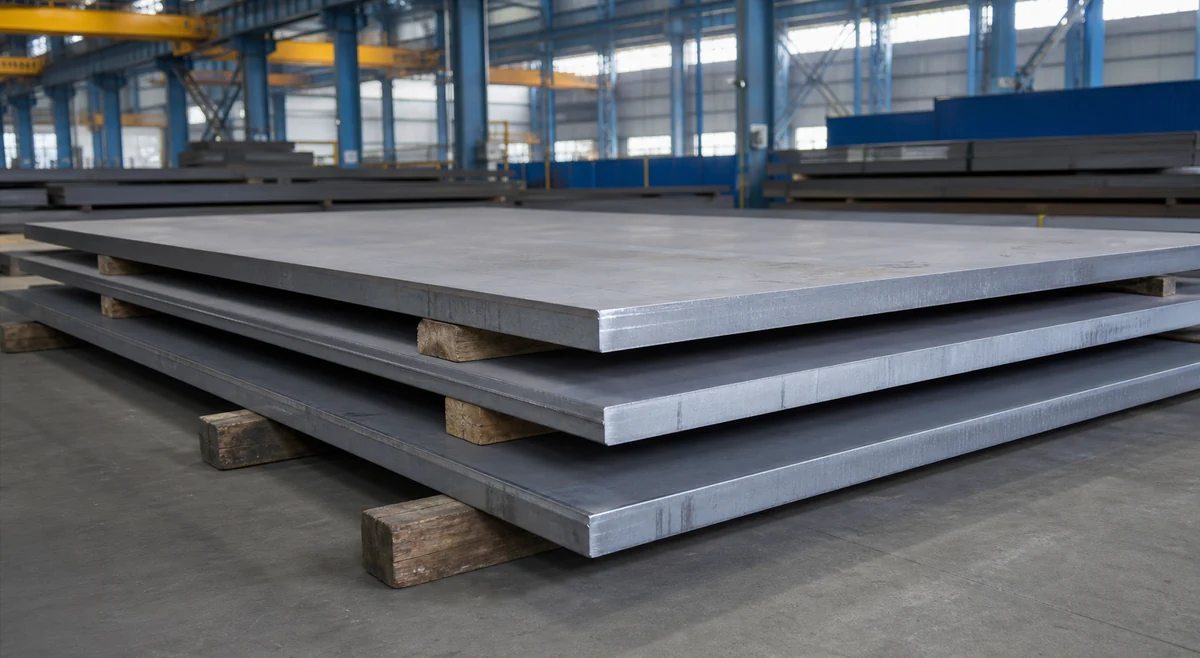
Reconcile a 5 × 1,000 × 2,000 mm plate
Enter plate, 5 mm thickness, 1,000 mm width, 2,000 mm length, quantity one and 310S. The calculator returns exactly 78 kg for the nominal plate. Dividing 1,000 kg by the unrounded piece mass gives 12.8205 theoretical pieces. This fractional value is useful for yield and budget comparisons, but the decimal portion of an uncut finished plate is not a complete purchasing unit.
The result therefore reports 12 whole plates. Their theoretical metal mass is 936 kg, leaving 64 kg below the one-tonne target. Buying 13 complete plates would instead require 1,014 kg of theoretical metal, before packing or any commercial reconciliation. Ask the supplier to quote the required whole-piece count and proposed package weights.
5 × 1,000 × 2,000 mm plate
One nominal plate weighs 78 kg. The one-tonne ratio is 12.8205 theoretical pieces; 12 whole pieces fit within 1,000 kg and leave 64 kg of target mass.
The example uses the 310S / 1.4845 preset density of 7,800 kg/m³. For another grade, enter the density stated in the applicable material document.
The figures are theoretical results from nominal inputs. Actual dimensions, tolerances and the agreed commercial basis determine delivered or invoiced weight.
Compare six one-tonne quantity calculations
The table includes light, medium and heavy nominal plate cases. It shows how a fixed 1,000 kg target behaves when one-piece mass changes: light plates leave a small remainder after many pieces, while a plate heavier than one tonne produces a mathematical ratio below one and zero complete pieces within the target. Each row shows the fractional ratio, whole count and remainder for its stated dimensions.
These dimensions are calculation examples, not guaranteed inventory, mill rolling limits or standard package quantities. Use the nearest row only to understand the method, then run the exact nominal dimensions from the RFQ. If the supplier proposes another width, length or thickness, recalculate that proposal instead of interpolating between rows. A small dimensional change can be commercially important when the quotient is close to the next whole plate.

| Example | Thickness | Width | Length | Piece mass | Theoretical pieces | Whole pieces | Remainder |
|---|---|---|---|---|---|---|---|
| 3 × 1,000 × 2,000 mm plate | 3 mm | 1,000 mm | 2,000 mm | 46.8 kg | 21.3675 | 21 | 17.2 kg |
| 5 × 1,000 × 2,000 mm plate | 5 mm | 1,000 mm | 2,000 mm | 78 kg | 12.8205 | 12 | 64 kg |
| 6 × 1,500 × 3,000 mm plate | 6 mm | 1,500 mm | 3,000 mm | 210.6 kg | 4.7483 | 4 | 157.6 kg |
| 8 × 1,500 × 6,000 mm plate | 8 mm | 1,500 mm | 6,000 mm | 561.6 kg | 1.7806 | 1 | 438.4 kg |
| 10 × 2,000 × 6,000 mm plate | 10 mm | 2,000 mm | 6,000 mm | 936 kg | 1.0684 | 1 | 64 kg |
| 12 × 2,000 × 6,000 mm plate | 12 mm | 2,000 mm | 6,000 mm | 1,123.2 kg | 0.8903 | 0 | 1,000 kg |
Use whole pieces for orders and ratios for comparison
A fractional piece count is a planning ratio. It can normalize quotations, compare alternative plate sizes or indicate how efficiently a mass target converts into pieces. A purchase line, however, normally needs an integer quantity of finished plates unless cutting from parent material is separately agreed. State the required whole-piece count in the RFQ, then show the theoretical tonnage that count represents. Do not send 12.8205 as though it were a deliverable quantity.
Reverse the question when production needs a minimum number of plates. Multiply the full theoretical piece mass by the required count, then add any approved spares, test material or process allowance as separately identified requirements. Hiding an allowance by increasing density, thickness or target mass makes later reconciliation difficult. If a supplier cuts finished plates from larger parent material, clarify whether remnants are charged, returned, retained or allocated across other order lines.
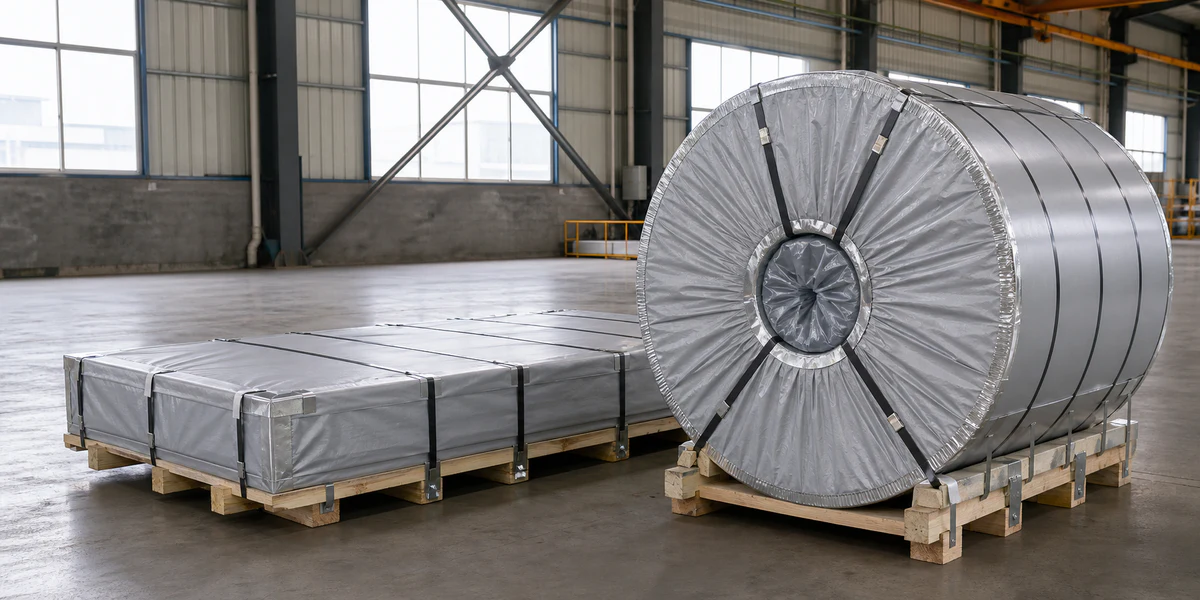
For logistics, use the piece result to screen handling and the aggregate theoretical metal mass to begin freight planning. Ask for the proposed package count, plates per package, net package mass and gross package mass. Skids, separators, wrapping and restraints are outside the metal geometry calculation. Confirm lifting and vehicle limits against the actual packing proposal, with suitable operational margin, rather than treating a one-tonne target as the guaranteed gross weight of a bundle.
Confirm theoretical, delivered and invoiced weight
The calculation uses nominal dimensions and a density basis, so it returns theoretical metal mass. Delivered plates can have measured dimensions within the agreed order requirements, and processing such as trimming, edge preparation, holes or cut-outs can alter the finished geometry. The calculation does not observe those conditions. Do not add a generic tolerance percentage or assume that every plate will vary in the same direction; use the governing product standard, drawing and supplier confirmation for the actual order.
Quotation, packing list and invoice can also use different documented weight concepts. A packing list may distinguish net metal weight from gross shipping weight, while the commercial line may settle on theoretical or scale weight under agreed terms. Ask the supplier to name the basis used at each stage and reconcile it with the whole-piece quantity. The remainder in this calculator is simply unused theoretical target mass, not scrap, packing allowance, price credit or evidence of measured delivery weight.
Send an RFQ that joins quantity, weight and logistics
Provide grade and designation, plate form, governing standard, nominal thickness, width, length, required whole-piece quantity, surface and edge condition, processing, inspection documents and destination. Include the calculated kilograms per piece and aggregate theoretical mass when discussing price, handling or freight. Ask the supplier to confirm availability, manufacturing route, packing plan and commercial weight basis for the actual order.
Before award, rerun every final line from the supplier's confirmed dimensions and the appropriate density document. Check that whole counts meet the bill of materials, that any contingency is explicit, and that the heaviest piece and package suit the receiving plan. Resolve discrepancies between theoretical, packing-list, scale and invoiced figures in writing. This turns a simple division into a repeatable procurement control without pretending the calculator certifies the delivered goods.
Prepare your quote request
Frequently asked questions
Why is the whole-piece number lower than the theoretical ratio?
The ratio can include a fraction, but a finished plate is normally purchased as a complete piece. Count only the complete plates within the target; the unused theoretical target mass is shown separately.
How does a one-tonne result become an order quantity?
Use the whole-piece result as the starting quantity, then ask the supplier to confirm availability, the commercial weight basis, package arrangement and gross shipping mass for the actual order.
Can I reuse 7,800 kg/m³ for another stainless grade?
No. That density is used here for 310S / 1.4845. For another grade, enter the density confirmed by the applicable material document.
Is the leftover target weight a usable plate remnant?
No. It is an arithmetic remainder after counting complete plates. A usable remnant depends on the actual cutting layout, kerf and required part dimensions.