
Enter plate thickness, width, length, quantity and density to calculate theoretical kilograms per piece and total order mass. The 310S / 1.4845 selection uses 7,800 kg/m³. Use the result to check piece count, lifting limits, package planning, freight estimates and quotation weight basis. The six dimensions below are worked examples; send your exact grade, standard, size, quantity and required date for availability confirmation.
Use this result to: Estimate order and shipping mass for a defined 310S plate size
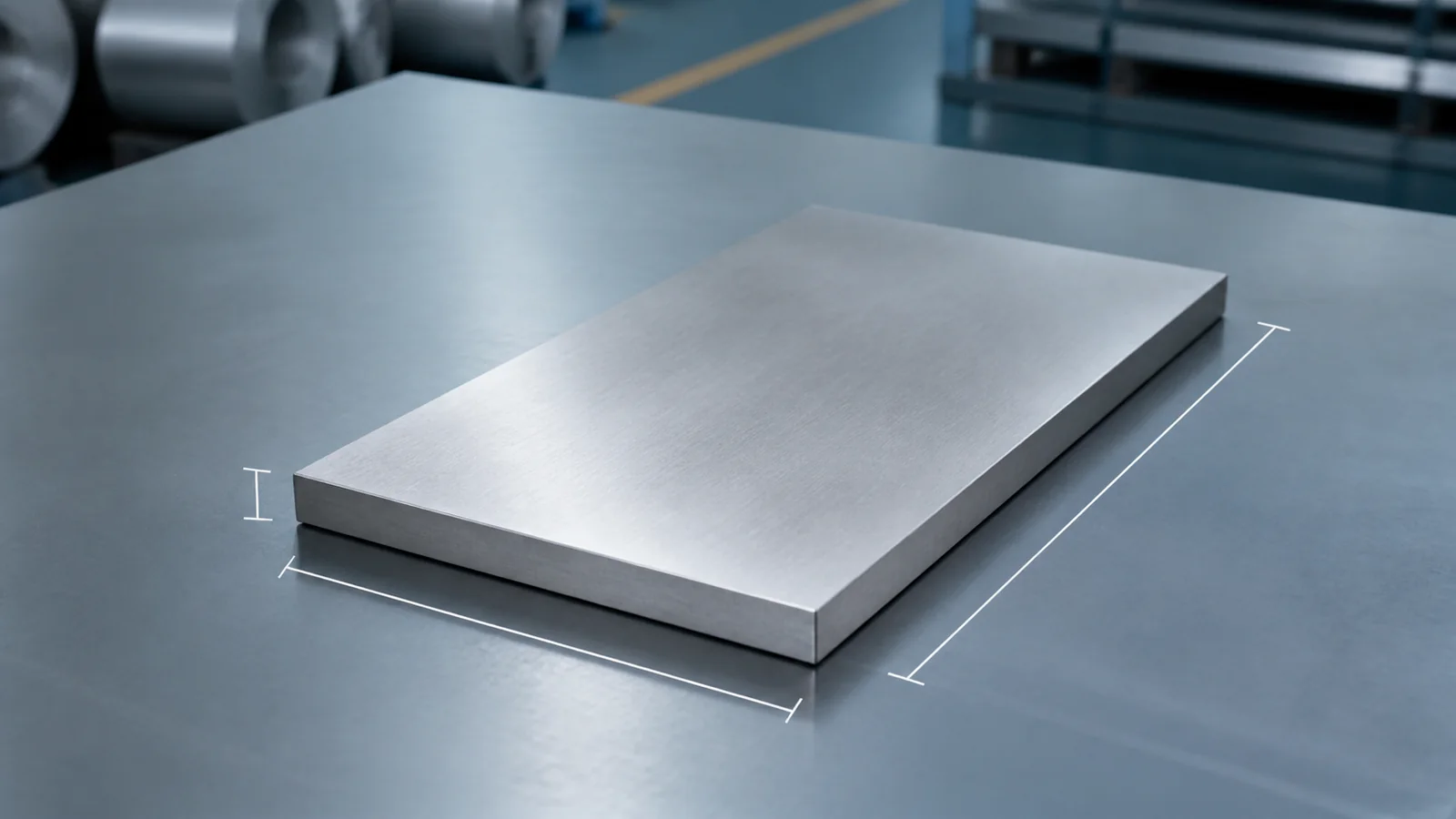
Start with the order dimensions
Record thickness, width, length and quantity in one unit system before comparing offers. A plate described as 8 × 1,500 × 6,000 mm has three nominal dimensions, and each must be entered in the corresponding field. Do not silently swap width and thickness or convert only part of the line item. The calculator normalizes those dimensions, finds the geometric volume and reports both kilograms per piece and total kilograms when a quantity is supplied. That makes the estimate traceable to the RFQ line rather than to a general weight chart.
The 310S / 1.4845 selection uses 7,800 kg/m³. If the enquiry changes to another grade, enter a density confirmed against the applicable producer data sheet, material specification or other agreed document. A convenient value copied from an unrelated stainless grade can shift every piece and every shipment by the same proportion, so grade designation and density belong together in the calculation record.
Calculate rectangular volume before mass
The plate method is volume multiplied by density. In metric form, convert thickness, width and length from millimetres to metres, multiply them to obtain cubic metres, then multiply by kilograms per cubic metre. Equivalently, multiply the three millimetre dimensions and divide by one billion before applying density. Keeping the conversion visible prevents a common spreadsheet error in which millimetres are treated as metres or a shortcut constant is used without knowing which density it assumes.
Calculate one piece first, even when the RFQ requests a large quantity. The per-piece figure answers lifting and fabrication questions; multiplying that same geometry by the whole-piece quantity answers order-mass and freight questions. For the worked size, one nominal plate weighs 561.6 kg and ten plates weigh 5,616 kg. Those two outputs describe different decisions, so an RFQ worksheet should label them clearly instead of presenting one unqualified number called simply "weight."

Work through an 8 × 1,500 × 6,000 mm plate
Enter plate as the shape, choose 310S, and enter 8 mm thickness, 1,500 mm width, 6,000 mm length and quantity one. The result is 561.6 kg per piece. It is based on a flat rectangular solid: no allowance is added for protective material, pallets, edge preparation, holes, cut-outs or fabrication remnants.
Now connect the result to the job. One plate at this nominal mass may require a different lifting plan from several thinner sheets even when the total order mass is similar. Ten nominal pieces total 5,616 kg before packing. Share both the piece mass and aggregate metal mass with the logistics team, then ask the supplier to state how plates will be split into packages. Package count and package gross mass cannot be inferred from plate geometry alone.
One 8 × 1,500 × 6,000 mm plate
At 7,800 kg/m³, one nominal 8 × 1,500 × 6,000 mm plate weighs 561.6 kg. Use the per-piece figure to check lifting limits before planning packages.
The example uses the 310S / 1.4845 preset density of 7,800 kg/m³. For another grade, enter the density stated in the applicable material document.
The figures are theoretical results from nominal inputs. Actual dimensions, tolerances and the agreed commercial basis determine delivered or invoiced weight.
Compare six plate-size calculations
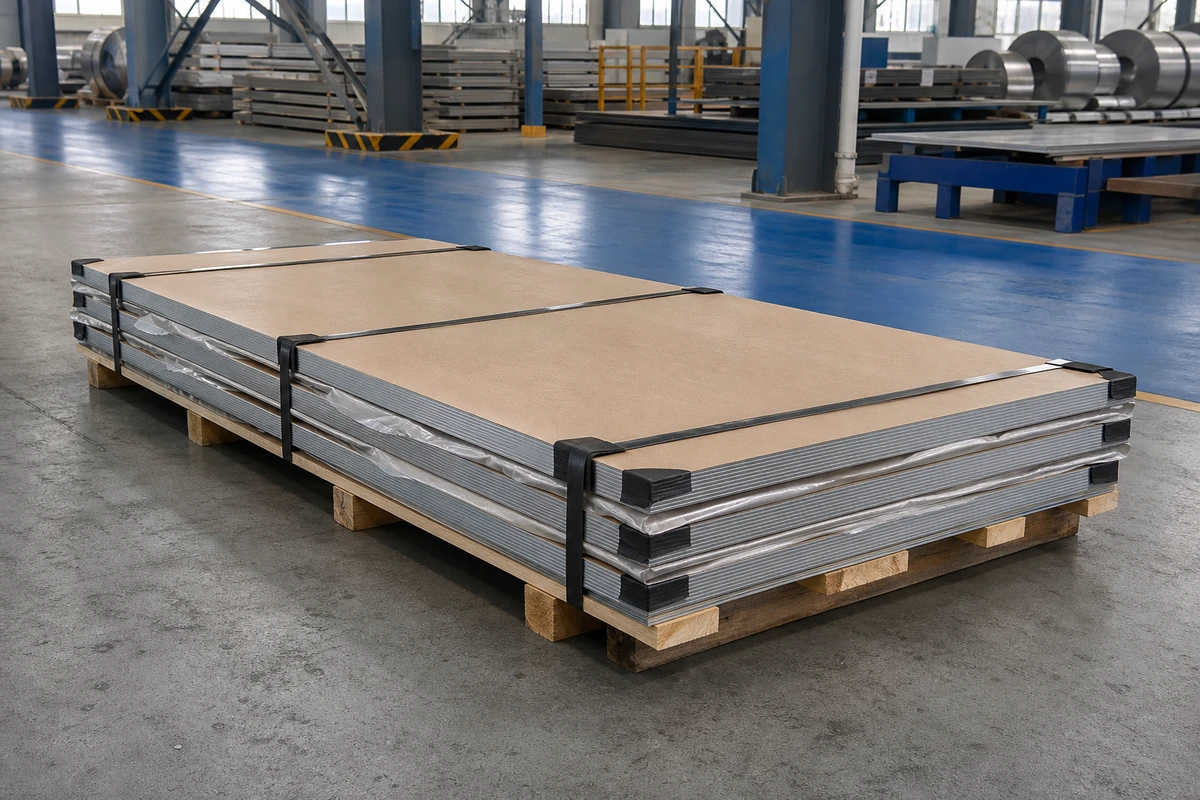
The table spans six labeled calculation examples from 3 × 1,000 × 2,000 mm through 12 × 2,000 × 6,000 mm. Each mass follows from its row dimensions and 7,800 kg/m³ density. The cases help a buyer see how thickness and footprint act together: doubling thickness doubles mass when width and length stay fixed, while changing all three dimensions can alter handling needs much more sharply. Ask for availability against the exact size and quantity in the RFQ.
Use the row nearest to an enquiry only as an orientation point; rerun the calculator with the exact nominal dimensions on the drawing or purchase description. A 1,219 × 2,438 mm case should not be rounded to 1,200 × 2,400 mm for convenience because the result would then describe a different rectangle. When comparing supplier offers, attach the entered dimensions and density to the result so that a numerical difference can be traced to inputs rather than debated as an unexplained discrepancy.
| Example | Thickness | Width | Length | Density | Theoretical weight |
|---|---|---|---|---|---|
| 3 × 1,000 × 2,000 mm plate | 3 mm | 1,000 mm | 2,000 mm | 7,800 kg/m³ | 46.8 kg |
| 5 × 1,219 × 2,438 mm plate | 5 mm | 1,219 mm | 2,438 mm | 7,800 kg/m³ | 115.9 kg |
| 6 × 1,500 × 3,000 mm plate | 6 mm | 1,500 mm | 3,000 mm | 7,800 kg/m³ | 210.6 kg |
| 8 × 1,500 × 6,000 mm plate | 8 mm | 1,500 mm | 6,000 mm | 7,800 kg/m³ | 561.6 kg |
| 10 × 2,000 × 6,000 mm plate | 10 mm | 2,000 mm | 6,000 mm | 7,800 kg/m³ | 936 kg |
| 12 × 2,000 × 6,000 mm plate | 12 mm | 2,000 mm | 6,000 mm | 7,800 kg/m³ | 1,123.2 kg |
Turn weight into handling and freight questions
Per-piece mass is the first screening value for cranes, forklifts, vacuum lifters, loading tables and receiving equipment. It does not certify that any device is suitable; the responsible logistics team must consider load rating, plate flexibility, center of gravity, lifting points and local procedures. Still, a reliable estimate identifies when an order deserves that review. Put the heaviest nominal piece on the RFQ and request the proposed package arrangement, especially when several plate sizes will share one shipment.
Aggregate theoretical metal mass helps request freight indications and compare shipment plans. Keep it separate from gross shipping mass, which can include skids, wrapping, separators, straps and other packing components. Ask for the number of packages, nominal net mass, expected gross mass and any carrier or site constraints that affect unloading. If a container or vehicle limit is important, use a documented margin and the supplier's packing plan rather than filling capacity to the calculator result.
Quantity also affects commercial reconciliation. A quotation may be expressed per kilogram while the production need is expressed in whole plates. Record the requested piece count alongside the theoretical total, and make sure cutting or remnant ownership is addressed if the supplier will process larger parent material. Weight estimation can expose the commercial question, but it cannot decide whether billing follows theoretical weight, scale weight, ordered quantity or another mutually agreed basis.
Confirm theoretical, scale and invoice weight
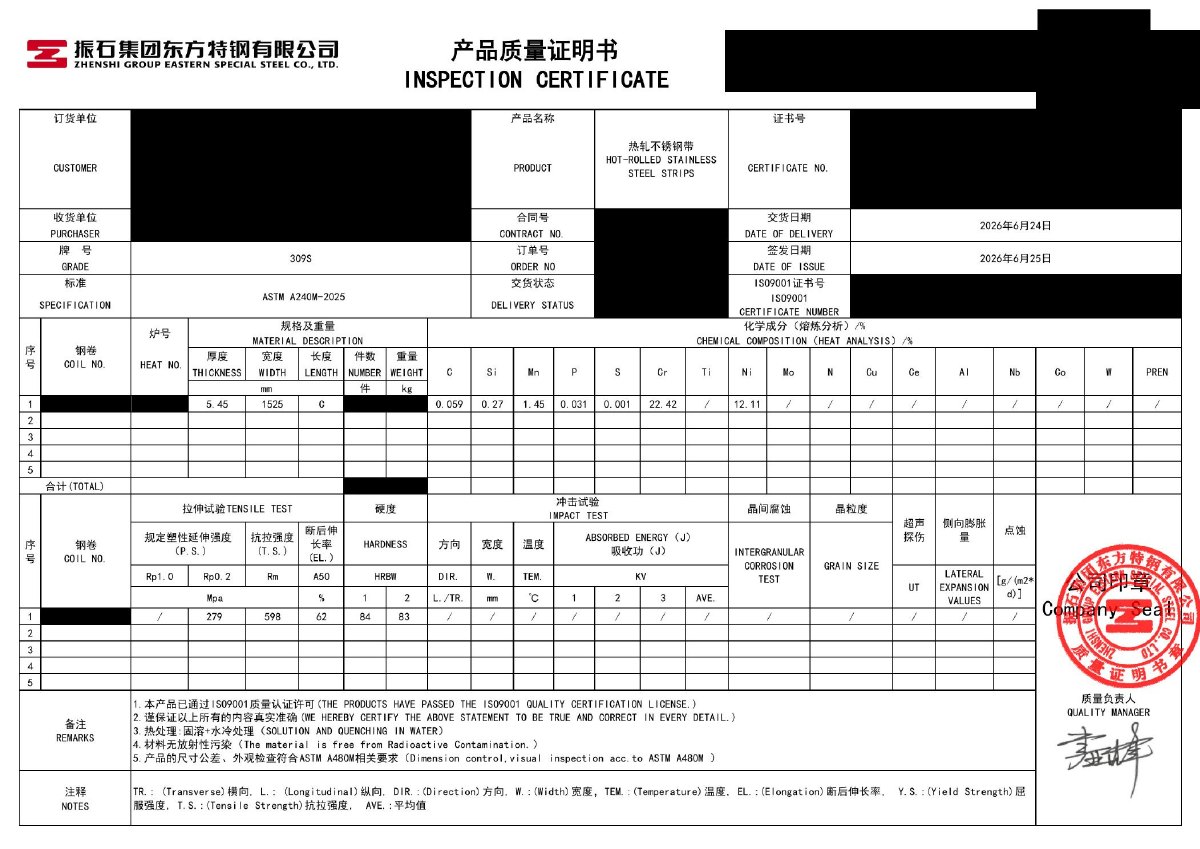
A theoretical result uses nominal geometry. Actual plate thickness, width and length may differ within the requirements agreed for the order, and measured density can vary with composition. Processing can also change the delivered geometry. These effects do not make the calculator wrong; they mean it answers a defined planning question. Avoid inserting tolerance percentages from a generic table. Instead, identify the governing product standard, ordered dimensional requirements and any project-specific acceptance criteria, then assess their weight effect when the supplier confirms them.
Ask the supplier to state the basis used on the quotation, order acknowledgement, packing list and invoice. The packing list may show measured net and gross weights for transport while the invoice follows an agreed theoretical basis, or both documents may use scale values. The important point is consistency and written agreement. Reconcile each line by heat, plate number or package where traceability is required, and retain the calculator inputs as a planning note rather than presenting them as evidence of delivered mass.
Prepare a plate RFQ that can be checked
Send grade and designation, product form, nominal thickness, width, length, quantity, required standard, surface or edge requirements, processing scope, inspection documentation and destination. Include the theoretical piece and order mass so the supplier can discuss packing, handling and freight. Ask the supplier to confirm availability and the proposed production route for your exact line item.
Before releasing the purchase order, rerun the calculator from the final line items rather than from an early take-off. Check that every row uses the intended grade document and unit system, then compare the result with the supplier's stated commercial and shipping bases. Resolve material differences in writing, particularly where lifting limits, freight thresholds or a kilogram-priced contract are involved. The final order should preserve the inputs and assumptions that made the comparison meaningful.
Prepare your quote request
Frequently asked questions
What does the 561.6 kg result represent?
It is the theoretical mass for the labeled nominal dimensions at the 310S / 1.4845 density of 7,800 kg/m³. Use measured dimensions and the commercial weight basis agreed in the order when reconciling delivered weight.
Can the same method be used for several plates?
Yes. Calculate nominal mass per plate and multiply through the positive whole-piece quantity. Keep per-piece and total mass visible, then obtain the supplier's package count and gross shipping mass for logistics.
Should I use 7,800 kg/m³ for a different stainless grade?
No. That density is used here for 310S / 1.4845. For another grade, enter the density confirmed by the applicable material document.
Does the plate estimate deduct holes or cut-outs?
No. The rectangular calculation uses the full nominal thickness, width and length. Holes, cut-outs, bevels and other removed material need a separate drawing-based calculation.