
Enter outside diameter, wall thickness, length and density to calculate theoretical kilograms per metre and total pipe mass. Selecting 310S / 1.4845 uses 7,800 kg/m³. Use the result to convert project metres into order mass, check straight-length quantity, plan bundles and request freight. Include the calculated total when asking for proposed package count and gross shipment weight. The six OD/wall combinations below are worked examples; specify the pipe or tube standard, manufacture route, ends, tests, exact size and quantity in the RFQ.
Use this result to: Convert 310S pipe geometry into kg per metre and project mass
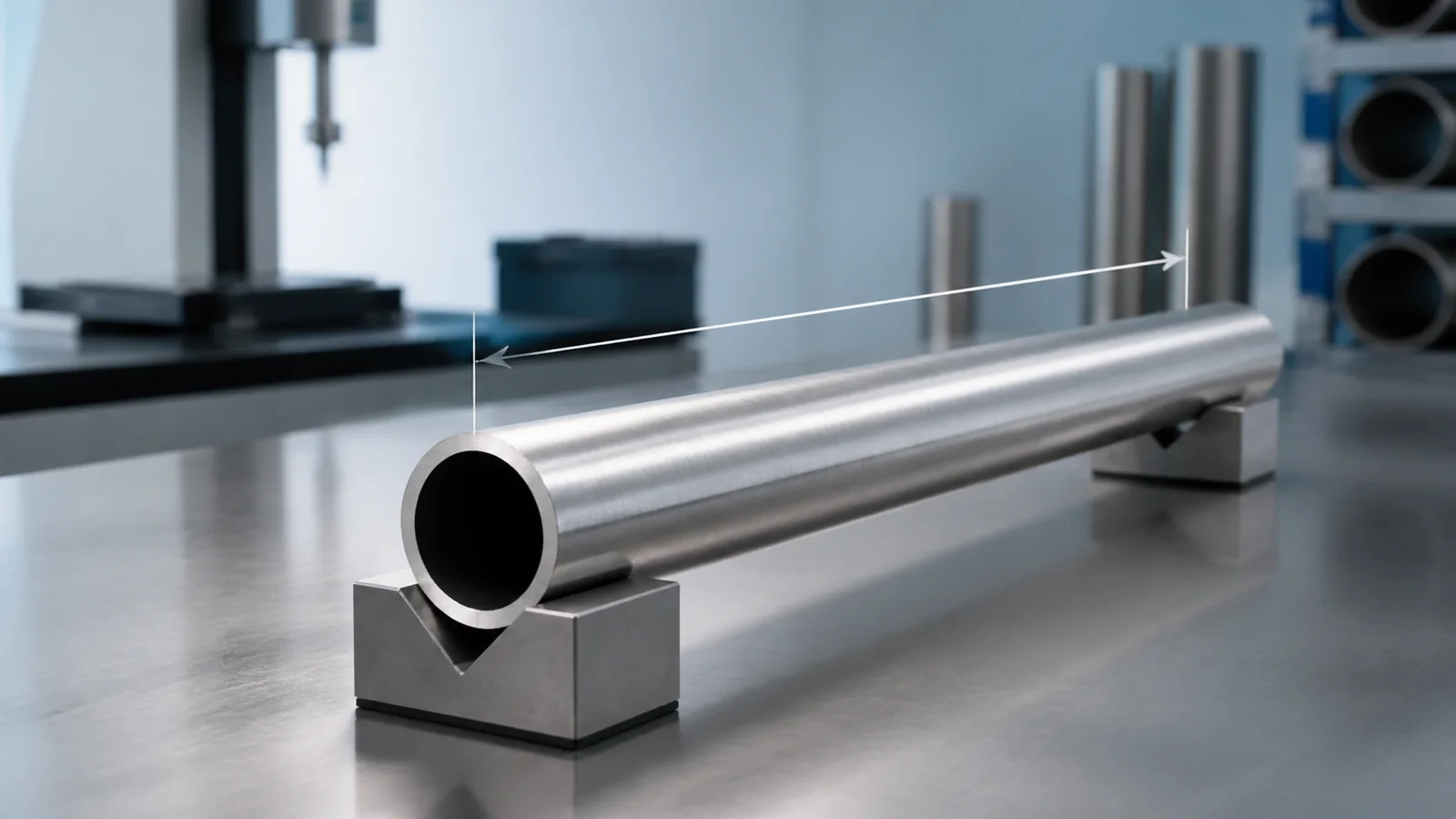
Define the tubular geometry before calculating
A pipe weight-per-metre calculation needs outside diameter, wall thickness, length and density. Outside diameter is the full dimension across the tube exterior; wall thickness is the radial metal thickness, not the difference between outside and inside diameter. For a per-metre comparison, set length to 1,000 mm and quantity to one. The calculator then provides the mass of that one-metre segment, giving procurement a common basis across different diameter-and-wall combinations.
Use 7,800 kg/m³ for the 310S / 1.4845 examples. If the requested material changes, enter a density confirmed from the relevant material document. Do not replace that confirmation with a single supposed stainless-steel density. Because density multiplies the entire annular volume, an unsupported input affects the per-metre result and every project-length extension derived from it.
Calculate the metal annulus
Pipe mass is based on the annular metal area, not the full outside-diameter circle. Find inside diameter by subtracting twice the wall thickness from outside diameter. The metal cross-sectional area is pi divided by four multiplied by the difference between outside diameter squared and inside diameter squared. Convert the area and length into cubic metres, then multiply volume by density. This exact annulus route avoids the material overstatement produced when hollow pipe is treated as solid round bar.
A thin-wall shortcut may look convenient, but the calculator uses the full geometry and validates that wall thickness is physically compatible with outside diameter. This matters when dimensions come from mixed schedules or tube lists. Keep diameter and wall in separate columns, retain their units, and recalculate from the original line item. Always keep OD, wall, density and calculation basis beside the kg/m result before reusing it for another product description.
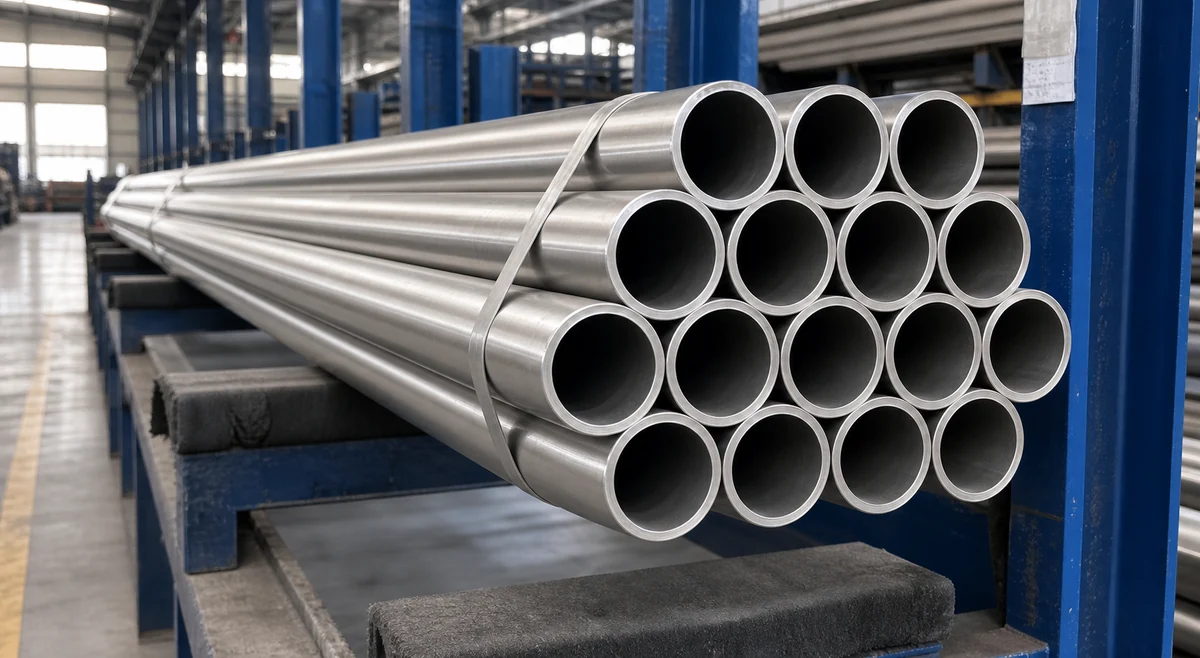
Work through 114.3 mm OD × 6 mm wall
Select round pipe, enter 114.3 mm outside diameter, 6 mm wall thickness, 1,000 mm length, quantity one and 310S. The result is 15.92 kg for the one-metre segment. The calculation subtracts the hollow center before applying density. Using 114.3 mm as a solid-bar diameter would answer a different geometry question and materially overstate the metal that is actually present.
For a project take-off of 120 m at the same nominal geometry, the theoretical pipe mass is 1,910.76 kg. If the purchasing plan uses 6 m straight lengths, 120 m corresponds to 20 lengths before any spare quantity or cutting plan is added. Show all three values—kg/m, aggregate metres and straight-length count—because each supports a different commercial or logistics decision.
114.3 mm OD × 6.0 mm wall
For a one-metre nominal length and 7,800 kg/m³ density, the annulus formula returns about 15.92 kg/m. Multiply by the project metres for a theoretical project mass.
The example uses the 310S / 1.4845 preset density of 7,800 kg/m³. For another grade, enter the density stated in the applicable material document.
The figures are theoretical results from nominal inputs. Actual dimensions, tolerances and the agreed commercial basis determine delivered or invoiced weight.
Compare six OD and wall calculations
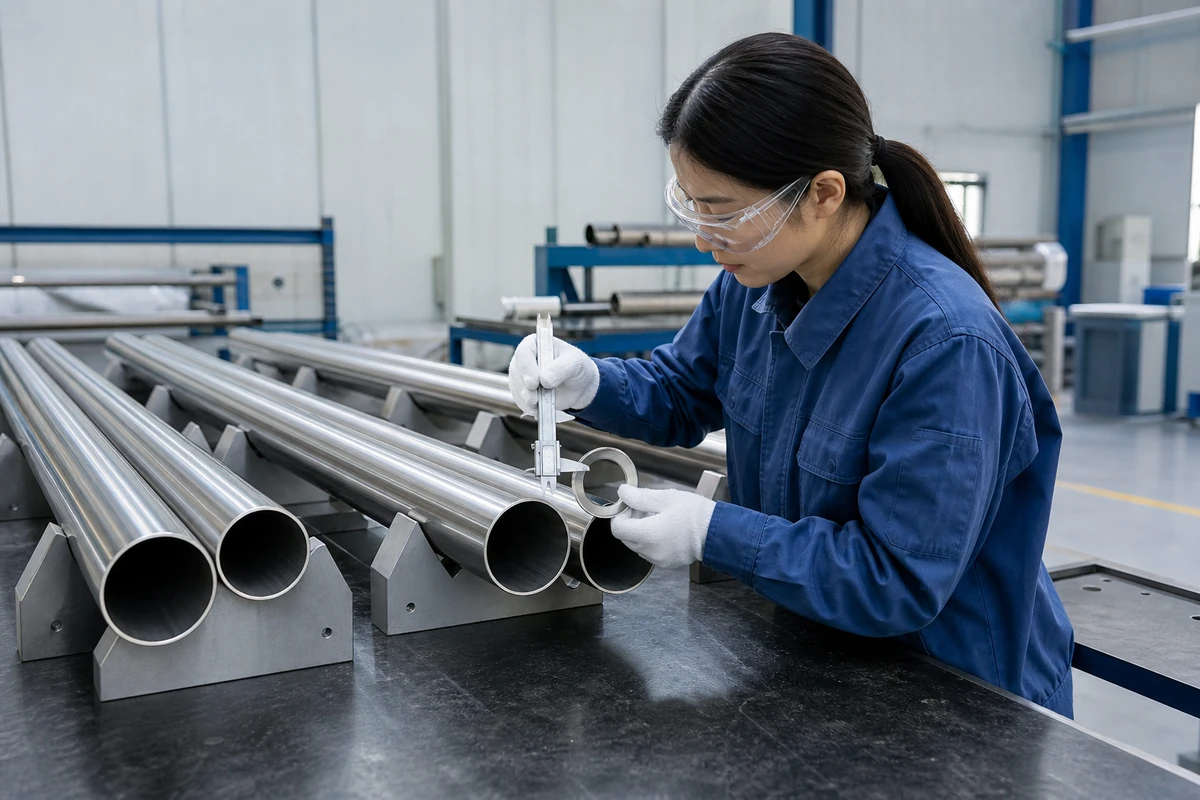
The table covers 21.3/2.0, 33.7/3.0, 60.3/3.9, 88.9/5.5, 114.3/6.0 and 168.3/7.1 mm OD/wall examples. Each row uses exactly one metre and 7,800 kg/m³, so differences arise from annular geometry rather than length or material assumptions. Use the list to see how diameter and wall interact, then state the required product standard, exact dimensions and quantity in the RFQ.
Do not select the nearest row when the RFQ calls for another dimension. A small wall change affects both inside diameter and metal area, while a diameter change alters circumference as well. Enter the stated OD and wall from the purchase description and preserve any decimal precision supplied. If the project specification is expressed by nominal pipe size and schedule rather than explicit dimensions, first confirm the ordered OD and wall route with the supplier or governing document, then calculate from those confirmed values.
| Example | Outside diameter | Wall | Length | Density | Theoretical weight |
|---|---|---|---|---|---|
| 21.3 mm OD × 2.0 mm wall | 21.3 mm | 2.0 mm | 1,000 mm | 7,800 kg/m³ | 0.95 kg/m |
| 33.7 mm OD × 3.0 mm wall | 33.7 mm | 3.0 mm | 1,000 mm | 7,800 kg/m³ | 2.26 kg/m |
| 60.3 mm OD × 3.9 mm wall | 60.3 mm | 3.9 mm | 1,000 mm | 7,800 kg/m³ | 5.39 kg/m |
| 88.9 mm OD × 5.5 mm wall | 88.9 mm | 5.5 mm | 1,000 mm | 7,800 kg/m³ | 11.24 kg/m |
| 114.3 mm OD × 6.0 mm wall | 114.3 mm | 6.0 mm | 1,000 mm | 7,800 kg/m³ | 15.92 kg/m |
| 168.3 mm OD × 7.1 mm wall | 168.3 mm | 7.1 mm | 1,000 mm | 7,800 kg/m³ | 28.05 kg/m |
Scale kg per metre to lengths, bundles and deliveries
Begin with the bill-of-material total metres, then separate that total into the straight lengths the supplier will deliver. A 120 m requirement might be twenty 6 m lengths, ten 12 m lengths, or a cutting combination with remnants; the same aggregate metres can create very different bundle lengths and unloading requirements. State required cut lengths, quantity by length and any acceptable length variation in the RFQ instead of asking only for a total tonnage.
Use the calculated project metal mass to screen transport and lifting, but ask the supplier for the proposed bundle count and gross weight. Dunnage, end protection, wrapping and other packing components are outside annular metal volume. Long bundles also introduce handling questions that mass alone cannot resolve, including support spacing, vehicle deck length, lifting-point arrangement and site access. The responsible parties should confirm equipment and procedures against the actual packing proposal.
For procurement comparisons, normalize offers to the same OD, wall, total metres and commercial weight basis. One supplier may quote per metre and another per kilogram; the calculator helps reconcile those structures but does not account for price, scrap, testing or processing charges. If cut pieces are required, distinguish ordered finished count from parent-length count and identify whether offcuts are included, returned or charged. That makes the weight estimate useful in a real bid comparison.
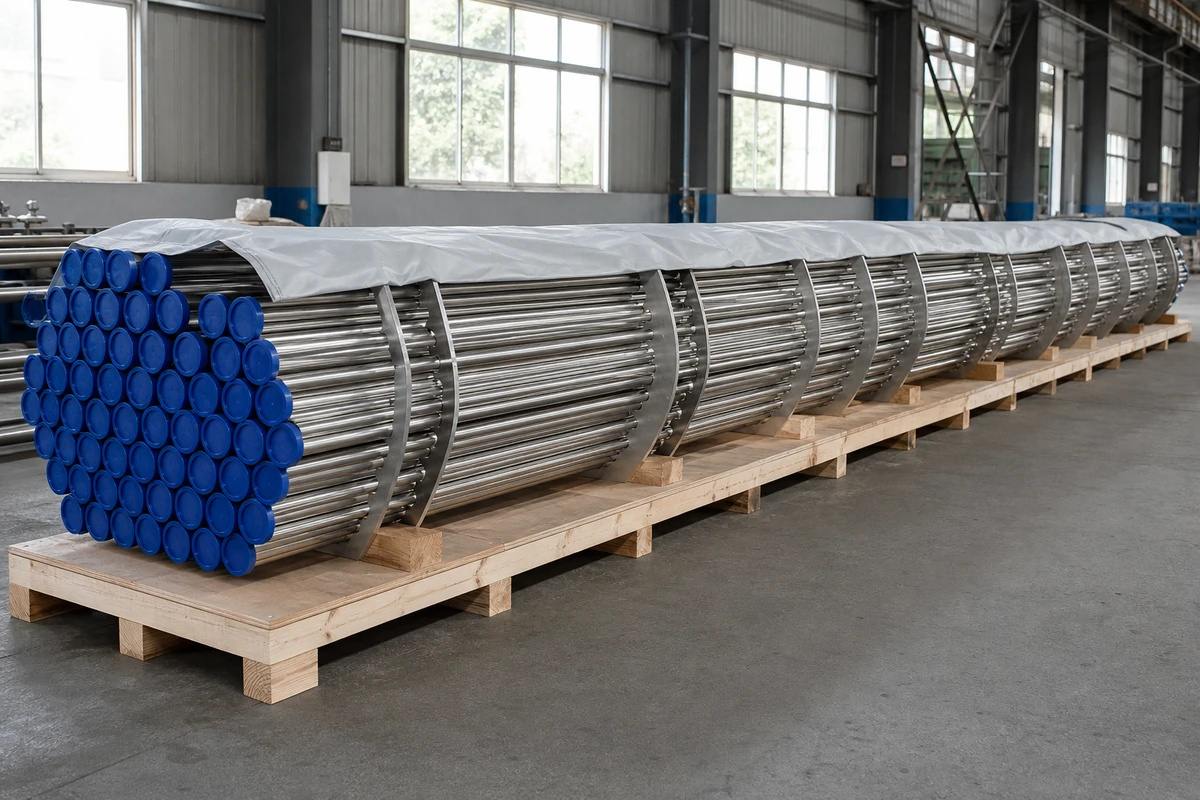
Confirm pipe route and commercial weight basis
Outside diameter and wall do not define whether the ordered product is seamless pipe, welded pipe, welded tube or another tubular route. They also do not specify end preparation, surface condition, heat treatment, testing, inspection documents or dimensional acceptance. State the applicable product standard and complete purchase description. Theoretical kg/m should be treated as a calculation attribute of that description, not as evidence that two otherwise different tubular products are interchangeable.
Nominal geometry does not capture permitted dimensional variation or measured density variation. Do not apply a tolerance table from an unrelated standard to manufacture an apparent minimum or maximum mass. Ask which dimensions and requirements govern the order, and clarify whether quotation, packing list and invoice use theoretical, measured or another agreed weight. A packing list may include net and gross scale values even when a commercial line uses a theoretical basis, so label comparisons carefully.
Build a pipe RFQ the supplier can verify
Provide grade and designation, pipe or tube route, governing standard, outside diameter, wall thickness, required straight lengths, number of lengths, end condition, processing, test scope, inspection documentation and delivery destination. Add calculated kg/m and total theoretical metal mass for quantity, packing and freight discussion. Ask the supplier to confirm the dimensional interpretation, manufacture route, achievable cut plan and packing proposal.
Before award, rerun each final line with the confirmed dimensions and density document. Reconcile aggregate metres with whole straight lengths, planned spares and cutting allowance; then compare the resulting metal mass with the supplier's quotation and logistics data. Resolve any difference in inputs or basis in writing, especially when the offer switches between price per metre, price per piece and price per kilogram.
Prepare your quote request
Frequently asked questions
Why not use the outside diameter as a solid bar?
Pipe is hollow. The annulus calculation subtracts the inside circular area; a solid-bar formula counts the hollow center as metal and therefore overstates mass.
What else must accompany kg per metre in an RFQ?
State the manufacturing route, governing standard, diameter and wall requirements, cut lengths, ends, tests and documentation so the supplier can quote the correct tubular product.
How do I convert kg/m into a pipe order mass?
Multiply through the confirmed aggregate metres, then reconcile those metres with the whole straight-length count and cutting plan. Keep theoretical metal mass separate from bundle gross mass.
Can nominal pipe size be entered as the outside diameter?
Use the outside diameter specified for the pipe, not the nominal size label. Confirm outside diameter and wall thickness from the ordered dimensional standard or drawing before calculating.